

Gold Coins in the Abbasid & Umayyad Caliphate
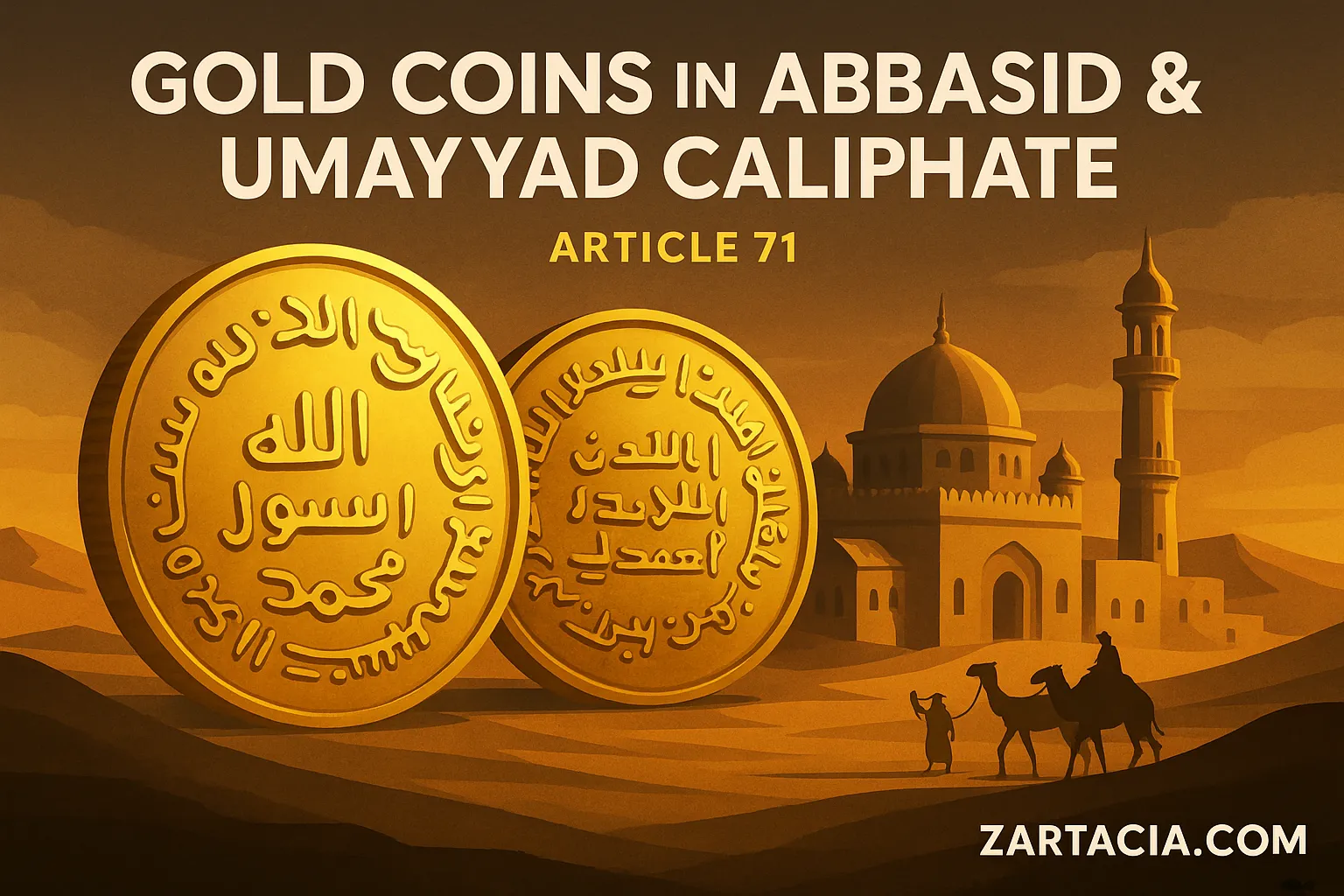
The Umayyad and Abbasid Caliphates marked a golden era not just in politics and culture, but also in the economic system of Islam. Central to this system were the gold dinar coins, which became a symbol of Islamic sovereignty, facilitating trade, governance, and cultural identity across a vast empire.
Gold Coins in the Umayyad Caliphate
-
Caliph Abd al-Malik ibn Marwan (685–705 CE): first to mint distinct Islamic gold coins.
-
Replaced Roman and Byzantine coins that carried images of emperors.
-
Coins bore Qur’anic inscriptions like Surah Ikhlas (112), declaring the oneness of Allah.
-
Standardized weight: ~4.25 grams per dinar.
-
Boosted Islamic trade across the Mediterranean, North Africa, and Asia.
💡 Lesson: Coins became a medium of both commerce and da’wah.
Gold Coins in the Abbasid Caliphate
-
Abbasids continued and expanded Umayyad reforms.
-
Coins minted in Baghdad, Kufa, and other hubs bore inscriptions of Allah’s greatness and the Prophet ﷺ.
-
Abbasid dinar became the international trade currency, trusted across Europe, Africa, and Asia.
-
Used for zakat, taxes, and salaries, strengthening the Bayt al-Mal (Islamic treasury).
💡 Example: Merchants on the Silk Road preferred Abbasid dinars due to their purity and stability.
Role in Trade and Governance
-
Gold coins unified the diverse Caliphate economy.
-
Ensured fair weights and measures in markets.
-
Symbolized Islamic political legitimacy.
-
Provided economic stability in an era of vast territorial expansion.
Legacy of Umayyad & Abbasid Gold Coins
-
Established a model of currency based on purity, stability, and Islamic ethics.
-
Inspired later Muslim dynasties (Fatimids, Ottomans, Mughals).
-
Today, collectors value these coins as symbols of Islamic heritage.
🎓 Student Section
Summary (5 Bullets):
-
Umayyads introduced the first purely Islamic gold dinar.
-
Abbasids expanded coinage with global trade reach.
-
Qur’anic inscriptions replaced images of rulers.
-
Coins were used in zakat, salaries, and taxes.
-
Gold coins symbolized Islamic unity and power.
Quiz (5 Questions):
-
Who introduced the first Islamic gold dinar?
-
What Qur’anic Surah was inscribed on Umayyad coins?
-
Which city was a key mint for Abbasid coins?
-
How much did a gold dinar weigh?
-
Why were Abbasid coins trusted in global trade?
Difficult Words (Glossary Table):
| Word | Meaning in Urdu |
|---|---|
| Minting | سکے بنانے کا عمل |
| Inscription | تحریر / کندہ عبارت |
| Sovereignty | حکمرانی / اقتدار |
| Treasury | خزانہ |
| Legitimacy | جواز / قانونی حیثیت |
❓ FAQs
Q1: Why did Umayyads replace Roman/Byzantine coins?
To establish a unique Islamic identity and reject idols.
Q2: What was special about Abbasid coins?
They became a global standard in trade.
Q3: Were Qur’anic verses inscribed on gold coins?
Yes, often Surah Ikhlas and shahadah statements.
Q4: What was the weight of a dinar?
Around 4.25 grams.