
What is Technical SEO? Explained Simply
Article 33 – Complete SEO Article
When we talk about SEO:
When we talk about SEO, most people think of keywords, backlinks, and content writing. But none of that matters if search engines cannot access and understand your website properly. This is where Technical SEO comes into play. It is the foundation of your online presence, ensuring that Google and other search engines can crawl, index, and display your site effectively. Without it, even the best content may never reach your audience.
Technical SEO as the backbone of your website
Think of Technical SEO as the backbone of your website. Just like a house needs a strong foundation before decorating, your website needs a clean technical structure before focusing on content or marketing. Issues such as slow loading speed, broken links, or missing sitemaps can silently kill your rankings. On the other hand, fixing technical issues makes your site faster, more secure, and user-friendly — which directly improves SEO performance.
Technical SEO in simple terms:
In this guide, we’ll explain Technical SEO in simple terms, breaking down its meaning, why it matters, its key elements, and practical ways to improve it. Whether you’re a student, a blogger, or a business owner, mastering Technical SEO will help you build a strong digital foundation. Let’s explore how it works and why it is essential for success in 2025.
Main Content
Definition of Technical SEO
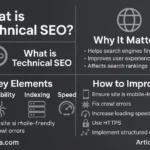
Technical SEO refers to the process of optimizing your website’s infrastructure so that search engines can easily crawl, index, and rank your content. Unlike On-Page SEO (which deals with keywords and content) or Off-Page SEO (which deals with backlinks), Technical SEO focuses on the behind-the-scenes setup of your site.
For example, if your website loads slowly, has errors, or isn’t mobile-friendly, search engines may not index it properly. As a result, your content will struggle to appear in search results.
In short: Technical SEO = Making your website accessible, understandable, and efficient for search engines.
Why Technical SEO Matters
Imagine writing the most detailed article on “Best Web Hosting in Pakistan,” but Google doesn’t crawl your site because of broken technical settings. Your hard work would go unnoticed. That’s why Technical SEO is crucial.
-
Search Engines Rely on It: Crawlers need clean site architecture to move through pages smoothly.
-
User Experience: Fast, secure, and mobile-friendly sites reduce bounce rates.
-
Ranking Factor: Google has confirmed that speed, mobile-first indexing, and security (HTTPS) affect rankings.
Case Study: A 2024 SEMrush report showed that websites improving their Core Web Vitals and technical setup saw a 30% increase in organic traffic within six months.
Key Elements of Technical SEO
Crawlability
Crawlability means search engines can access your website without barriers. If your robots.txt file blocks important pages, crawlers won’t see them.
Indexing
Even if crawled, pages must be indexed to appear in results. Duplicate content, noindex tags, or thin content can prevent indexing.
Website Speed
Page load time is critical. Slow websites frustrate users and are penalized by search engines. Tools like Google PageSpeed Insights help measure this.
How to Improve Technical SEO
-
Enable Crawling: Submit XML sitemaps to Google Search Console and fix robots.txt errors.
-
Fix Indexing Issues: Use canonical tags to avoid duplicate content, and ensure important pages are not blocked.
-
Boost Speed: Optimize images, enable caching, and use a Content Delivery Network (CDN).
-
Improve Mobile-Friendliness: Ensure responsive design and test using Google’s Mobile-Friendly Test.
-
Secure Your Site: Always use HTTPS with an SSL certificate.
-
Structured Data: Add schema markup for better rich snippets in search results.

Student Section
Summary
Technical SEO is the process of making your website easier for search engines to crawl, index, and rank. It focuses on behind-the-scenes elements like speed, security, mobile-friendliness, crawlability, and indexing. Without Technical SEO, even high-quality content may not appear in search results. The three key parts are crawlability (allowing bots to access your site), indexing (storing your pages in search engines), and speed (ensuring fast performance). To improve Technical SEO, submit XML sitemaps, fix broken links, use HTTPS, optimize speed, and add structured data. For students and beginners, understanding Technical SEO provides the foundation to build a successful online presence in 2025.
Quiz
-
What is Technical SEO?
-
Why is website speed important for SEO?
-
What is the role of XML sitemaps?
-
How does HTTPS affect SEO?
-
What is crawlability in SEO?
Difficult Words Table:
| Word | Meaning in Urdu |
|---|---|
| Crawlability | ویب کو تلاش کرنے کی صلاحیت |
| Indexing | فہرست میں شامل کرنا |
| Canonical Tag | اصل صفحے کا حوالہ دینا |
| Sitemap | ویب پیجز کی فہرست |
| Structured Data | منظم ڈیٹا / اسکیما مارک اپ |
FAQs
Q1: Is Technical SEO more important than content?
Both are equally important; without Technical SEO, content may not be discovered.
Q2: Do I need coding skills for Technical SEO?
Basic knowledge helps, but most fixes can be done with SEO tools and CMS plugins.
Q3: How often should I audit Technical SEO?
At least every 3–6 months or after major website changes.
Q4: What tools are best for Technical SEO?
Google Search Console, Screaming Frog, Ahrefs, SEMrush, and PageSpeed Insights.
Read More Section
People are also reading:
Article No: 33