
Introduction
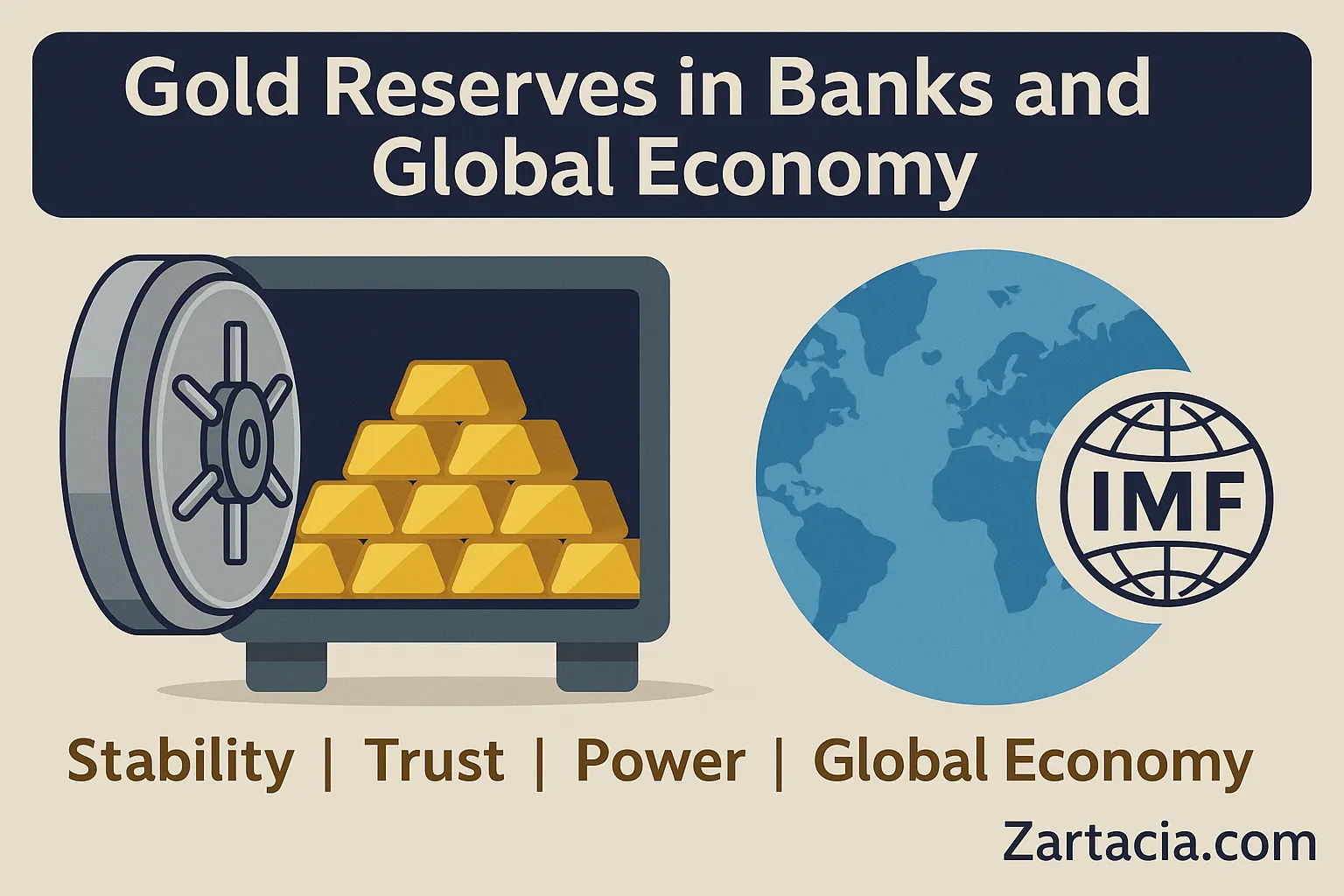
Gold has always been more than just a precious metal. In the modern era, it serves as the backbone of financial systems through gold reserves held by central banks. These reserves act as a guarantee of national wealth, a hedge against economic uncertainty, and a tool for stabilizing currencies. Even after the collapse of the Gold Standard, nations still rely on gold as a cornerstone of their economic strategies.
This article explores the importance of gold reserves in banks, their impact on the global economy, and why gold continues to play a vital role in international finance.
What Are Gold Reserves?
Gold reserves are the physical stocks of gold held by a country’s central bank or financial authority.
-
Purpose: They provide security, ensure liquidity, and build trust in a nation’s currency.
-
Measurement: Reserves are usually measured in metric tons, with each ton symbolizing economic strength.
-
Global Role: Together, central banks across the world hold more than 35,000 metric tons of gold.
👉 Gold reserves are not just wealth; they are symbols of financial sovereignty.
Why Do Banks Hold Gold Reserves?
-
Economic Stability: Gold protects against inflation and currency devaluation.
-
Crisis Hedge: During wars, recessions, or financial crises, gold provides security.
-
Trust in Currency: When backed by gold, national currencies gain international credibility.
-
Trade and Payments: In earlier times, gold reserves were used to settle international payments.
-
Diversification: Gold balances risk when foreign exchange reserves fluctuate.
👉 Simply put, gold reserves are a shield against uncertainty.
The IMF and Gold – A Global Framework
The International Monetary Fund (IMF) plays a key role in regulating international finance, and gold has always been central to its system.
-
At its founding in 1944, the IMF valued currencies against the US dollar, which was tied to gold.
-
Even today, the IMF holds around 2,800 metric tons of gold, making it one of the largest institutional holders.
-
Gold gives the IMF credibility and flexibility when supporting member nations.
👉 Gold remains the hidden backbone of global financial institutions.
Countries with the Largest Gold Reserves
As of recent data, these countries hold the largest official gold reserves:
-
United States: Over 8,100 tons (the largest in the world).
-
Germany: Around 3,300 tons.
-
Italy and France: Each hold more than 2,400 tons.
-
Russia and China: Actively increasing reserves to reduce dependence on the US dollar.
-
India: A traditional gold-rich country with growing reserves.
👉 The bigger the reserves, the stronger the nation’s financial credibility.
Gold Reserves and Currency Stability
Gold reserves have a direct effect on how currencies are valued and perceived:
-
Backing for Fiat Currency: Even though modern currencies are no longer gold-backed, reserves create trust.
-
Investor Confidence: High reserves attract investment, as they show economic strength.
-
Exchange Rates: Countries with strong gold reserves often enjoy more stable exchange rates.
-
Inflation Control: Gold reserves act as a buffer against inflation and currency collapse.
👉 Gold is the anchor of financial confidence in both strong and weak economies.
Modern Role of Gold in the Global Economy
In today’s digital and paper money world, gold may seem old-fashioned, but its role is still critical.
-
Central banks continue to buy gold as a long-term investment.
-
Gold is a safe haven during stock market crashes.
-
It reduces reliance on the US dollar in global trade.
-
Countries like China and Russia see gold as a tool for political and economic independence.
👉 Gold is no longer money itself, but it remains the ultimate store of value.
Extra Strong Paragraphs (SEO & Readability)
Gold as a Silent Guarantee
Moreover, gold reserves serve as a silent guarantee of national power. In addition to financial stability, they provide confidence to investors and international partners. As a result, countries with higher reserves command greater influence in global markets.
The Strategic Power of Gold
On the other hand, gold is more than economics; it is a geopolitical tool. Therefore, nations that increase gold holdings reduce dependence on foreign currencies. As a result, they gain independence and bargaining power in global negotiations.
Lessons for the Future
In addition, the history of gold reserves proves that stability requires tangible assets. Consequently, despite digital currencies and advanced systems, the timeless security of gold ensures it will remain vital in global finance.
Conclusion
Gold reserves in banks are more than symbolic treasures. They are practical tools of stability, trust, and power. From the IMF to individual nations, gold continues to strengthen economies and protect against global uncertainties. While currencies may change, gold’s enduring role as a guardian of stability will never fade.
FAQs
Q1. Why do central banks still hold gold reserves?
To ensure stability, protect against inflation, and build investor confidence.
Q2. Which country has the largest gold reserves?
The United States, with more than 8,100 metric tons.
Q3. Does the IMF hold gold?
Yes, the IMF holds around 2,800 tons, making it a top global holder.
Q4. How do gold reserves affect currency value?
They build trust, attract investors, and stabilize exchange rates.
Q5. Is gold still important in the digital era?
Yes, because it remains a safe haven asset and a hedge against crises.
🟢 Internal Linking Suggestions
-
Link to “Gold as Currency and Economy” (Article no 3)
-
Link to “Gold Coins and the Gold Standard” (Article no 14)
🟢 External Linking Suggestions
🟢 Video Link
Why Do Central Banks Hold Gold? | Financial Documentary
Student Section
📖 Key Points (Summary for Students)
-
Gold reserves are physical gold held by central banks.
-
They protect against inflation and economic crises.
-
The IMF is one of the largest holders of gold.
-
The US, Germany, Italy, and France have the largest reserves.
-
Gold still ensures global stability despite modern financial systems.
📝 Student Activity / Quick Quiz
-
Define gold reserves in your own words.
-
Which country has the world’s largest gold reserves?
-
True/False: The IMF does not hold any gold.
-
Why do investors value countries with strong gold reserves?
-
Write two reasons why gold is a hedge against inflation.
(Possible Answer for Q3: False)
🔑 Difficult Words and Meanings (Urdu)
| Word | Meaning in Urdu |
|---|---|
| Reserves | ذخائر |
| Liquidity | نقدی کی دستیابی |
| Sovereignty | خودمختاری |
| Hedge | بچاؤ / تحفظ |
| Devaluation | قدر میں کمی |
| Credibility | اعتبار / ساکھ |
| Geopolitical | جغرافیائی سیاسی |
| Buffer | حفاظتی روک |
| Uncertainty | غیر یقینی صورتحال |
| Stability | استحکام |
