
Introduction
Gold has always been considered a reliable store of value, but its price is far from stable. Every day, gold prices fluctuate due to global and local economic conditions. International markets such as London, New York, and Dubai set the tone, while local markets like Pakistan follow their lead with regional adjustments. Understanding these fluctuations is essential for investors, jewelers, and ordinary people alike.
Why Do Gold Prices Fluctuate?
Gold prices are influenced by multiple global and local factors.
-
Inflation: When inflation rises, gold prices often increase as people turn to gold as a safe haven.
-
Interest Rates: Higher interest rates make bonds and savings attractive, often reducing gold demand. Lower rates push investors toward gold.
-
Currency Strength: Gold is priced in US dollars. When the dollar weakens, gold becomes cheaper for other countries, boosting demand.
-
Oil Prices: Rising oil prices increase inflation, indirectly pushing gold prices higher.
-
Geopolitical Crises: Wars, political instability, or pandemics cause investors to seek the security of gold.
-
Demand and Supply: Seasonal jewelry demand (especially in South Asia) and mining output affect price trends.
👉 In short, gold reacts to global economics, politics, and human psychology.
Global Gold Markets and Their Role
The price of gold is largely decided in major international markets:
-
London Bullion Market (LBMA): Sets the global benchmark price known as the “London Fix.”
-
New York COMEX Exchange: Futures contracts heavily influence short-term gold price movements.
-
Dubai Gold Souk: Acts as a regional hub connecting Middle Eastern and Asian buyers.
👉 These markets collectively create a global pricing system that local markets, including Pakistan, follow.
Gold Price Fluctuations in Pakistan
Pakistan’s gold market is directly linked to international prices but also shaped by local factors.
-
Exchange Rate: Since gold is priced in USD, the value of the Pakistani Rupee heavily affects domestic prices. A weaker rupee means more expensive gold.
-
Local Demand: Wedding seasons, Eid festivals, and cultural traditions drive up jewelry demand, raising prices temporarily.
-
Import Policies: Government taxes and import duties can raise gold prices.
-
Economic Instability: High inflation, political crises, or IMF negotiations impact gold demand as people rush to save wealth.
👉 As a result, gold prices in Pakistan often rise faster and higher than in global markets.
Impact on Ordinary People and Investors
-
Investors: See gold as a hedge against inflation and currency devaluation.
-
Jewelers: Face challenges with volatile prices affecting sales and customer demand.
-
Ordinary Buyers: Struggle with affordability, especially during wedding seasons when gold jewelry is essential.
👉 For Pakistanis, gold is not only an investment but also a cultural necessity.
Gold as a Safe Haven
Moreover, whenever uncertainty rises, gold prices surge. In addition to offering security, gold provides stability when other assets collapse. As a result, global investors consider gold a permanent insurance policy.
Pakistan’s Unique Gold Dynamics
On the other hand, Pakistan shows that local conditions amplify global trends. Therefore, currency depreciation often causes sharper increases in domestic gold prices. As a result, Pakistani investors rely on gold as both a financial and cultural safeguard.
Lessons for Investors
In addition, gold’s volatility teaches caution. Consequently, investors must balance short-term price swings with long-term stability. As a result, gold remains both an opportunity and a responsibility.
Conclusion
Gold prices fluctuate daily due to inflation, interest rates, currency values, and global uncertainty. While international markets like London and New York set the benchmark, local realities make gold even more unpredictable in Pakistan. For Pakistanis, gold is more than an investment; it is a part of culture, weddings, and family savings. Understanding price fluctuations helps both investors and ordinary people make wiser decisions.
FAQs
Q1. Why do gold prices rise during inflation?
Because people see gold as a safe haven when paper money loses value.
Q2. How does the US dollar affect gold prices?
A weak dollar makes gold cheaper internationally, raising demand and prices.
Q3. Why is gold expensive in Pakistan?
Due to rupee depreciation, high demand, and import duties.
Q4. Do global markets directly affect Pakistani gold rates?
Yes, Pakistan follows international benchmarks, adjusted for local exchange rates.
Q5. Should ordinary Pakistanis invest in gold?
Yes, but with caution. Gold protects wealth but prices can be highly volatile.
🟢 Internal Linking Suggestions
-
Link to “Gold as a Safe Haven in Economic Crisis” (Article no 3)
-
Link to “Modern Gold Reserves in Banks and Global Economy” (Article no 16)
🟢 External Linking Suggestions
-
World Gold Council – Price Trends
-
Pakistan Sarafa Market – Local Rates
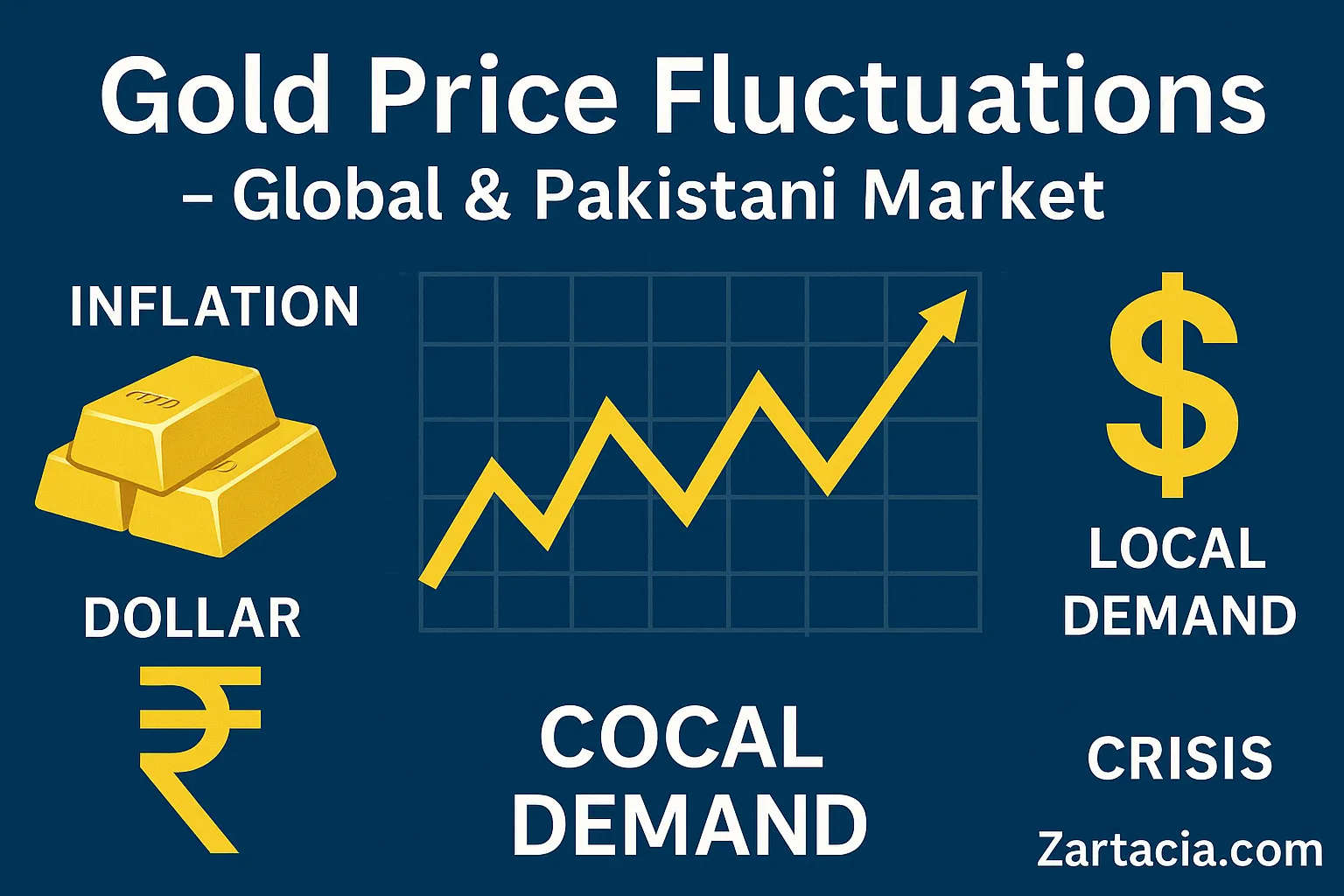
Gold Price Fluctuations – Global Markets and the Pakistani Market
🟢 Video Link
Why Do Gold Prices Fluctuate? | Global and Pakistan Explained
Student Section
📖 Key Points (Summary for Students)
-
Gold prices change daily due to inflation, interest rates, and global crises.
-
Major global markets (London, New York, Dubai) set price trends.
-
In Pakistan, rupee depreciation and cultural demand make gold more expensive.
-
Gold is a safe haven but volatile, requiring careful investment.
-
Understanding price trends helps investors and ordinary buyers.
📝 Student Activity / Quick Quiz
-
Name two global factors that affect gold prices.
-
True/False: A stronger rupee makes gold cheaper in Pakistan.
-
Why do gold prices rise in Pakistan during wedding season?
-
Explain one difference between global and Pakistani gold markets.
(Possible Answer for Q2: True)
🔑 Difficult Words and Meanings (Urdu)
| Word | Meaning in Urdu |
|---|---|
| Fluctuation | اُتار چڑھاؤ |
| Inflation | مہنگائی |
| Depreciation | قدر میں کمی |
| Benchmark | معیار / حوالہ |
| Affordability | استطاعت |
| Volatile | غیر مستحکم |
| Hedge | بچاؤ / تحفظ |
| Uncertainty | غیر یقینی صورتحال |
| Demand | طلب |
| Investor | سرمایہ کار |