

Introduction
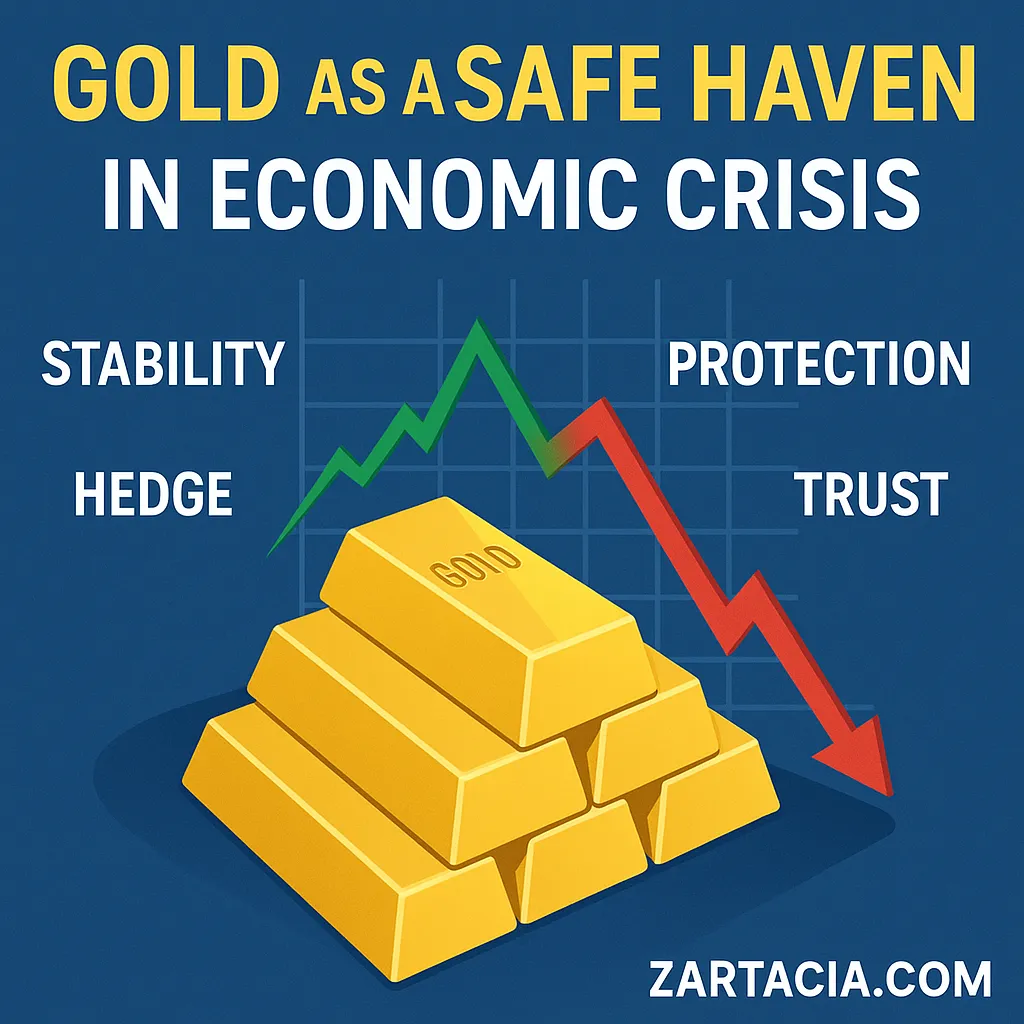
Whenever the global economy faces turbulence, investors immediately turn their eyes toward one asset: gold. From ancient civilizations to the digital age, gold has been trusted as a timeless store of value. Unlike paper currencies that can collapse under inflation or stock markets that crash overnight, gold often rises when uncertainty grows. This unique behavior has earned it the title of a “safe haven asset” in times of economic crisis.
But what makes gold so reliable? And why do investors across the world, from Wall Street bankers to small jewelers in Pakistan, continue to see gold as the ultimate form of protection? This article explores the role of gold during crises, historic examples of its resilience, and its relevance in the future of global finance.
Why Gold is Called a Safe Haven
Gold is called a safe haven because of its ability to retain or increase value when other assets lose ground.
First, gold is tangible and finite. Unlike currencies that governments can print at will, the supply of gold is limited. This scarcity ensures that its value cannot be inflated away. Second, gold is universally recognized. No matter the region or culture, gold has always been accepted as a form of wealth. Third, gold carries no default risk—unlike bonds or stocks that depend on the performance of companies or governments.
Moreover, during crises, investors seek psychological comfort. Gold represents security, permanence, and tradition. In addition, central banks also accumulate gold as a hedge, further strengthening its safe-haven status. As a result, gold consistently outperforms other assets in turbulent times.
Historical Examples of Gold as a Safe Haven
The Great Depression (1930s)
During the Great Depression, stock markets collapsed, banks failed, and unemployment skyrocketed. However, gold maintained its purchasing power. In fact, governments clung to gold reserves as their last anchor of credibility.
The 2008 Global Financial Crisis
When banks collapsed and real estate markets fell in 2008, gold prices surged. Investors rushed to buy gold, pushing its price above $1,000 for the first time in history. This demonstrated gold’s unmatched ability to shield wealth.
The COVID-19 Pandemic (2020)
In 2020, uncertainty gripped the world as markets fell sharply. Yet gold prices climbed to an all-time high of over $2,000 per ounce. Once again, gold proved that in moments of fear, it becomes the currency of last resort.
👉 Each crisis reinforced the belief that gold is the safest destination in stormy economic weather.
Gold in the Pakistani Economic Context
Pakistan provides a strong case study of gold’s role during crises.
-
Rupee Depreciation: Whenever the rupee weakens against the dollar, gold prices rise sharply in Pakistan. Families rush to buy gold to protect savings from erosion.
-
Inflation and Instability: During periods of high inflation, such as in recent years, gold becomes the preferred asset for ordinary households.
-
Cultural Value: Beyond investment, gold holds cultural significance in weddings and dowries, making it an inseparable part of financial planning.
-
Limited Options: With fewer investment avenues, Pakistanis trust gold more than volatile stock markets or unstable banking returns.
👉 For Pakistan, gold is not just a safe haven—it is a lifeline during economic distress.
How Investors Use Gold During Crises
Investors worldwide have developed strategies to leverage gold in times of crisis.
-
Portfolio Diversification: By adding gold to their assets, investors reduce overall risk.
-
Physical Gold Holdings: Many prefer bars, coins, and jewelry for direct control.
-
Exchange-Traded Funds (ETFs): Modern investors buy gold-backed securities for convenience.
-
Central Banks: Nations themselves diversify their reserves by increasing gold holdings.
These approaches prove that gold is not just an emotional choice but a strategic financial decision.
Extra Strong Paragraphs (SEO & Readability)
Gold as Financial Insurance
Moreover, gold acts as insurance against financial collapse. In addition to stability, it provides liquidity when other markets freeze. As a result, investors keep gold as a backup asset for emergencies.
The Universal Language of Gold
On the other hand, gold transcends borders. Therefore, it provides equal protection whether you are in America, Europe, or Pakistan. As a result, it unites investors globally as the ultimate safe haven.
Future of Gold in Crises
In addition, with rising debt and currency devaluations, future crises may see even stronger reliance on gold. Consequently, gold’s safe-haven role will remain intact, proving that trust is its greatest strength.
Conclusion
Gold has always been the world’s ultimate safe haven during economic crises. From the Great Depression to the COVID-19 pandemic, it has consistently proven its ability to protect wealth when other assets fail. In Pakistan, gold is not only an investment but also a cultural safeguard. For global investors, it remains the most reliable hedge against inflation, uncertainty, and economic shocks.
While digital currencies and paper money continue to evolve, gold’s enduring role as a symbol of security and stability ensures it will never lose its relevance.
FAQs
Q1. Why is gold called a safe haven?
Because it retains or increases value during crises when other assets lose ground.
Q2. What happened to gold during the 2008 crisis?
Its price surged above $1,000 as investors sought safety.
Q3. How did COVID-19 affect gold prices?
Gold reached an all-time high above $2,000 per ounce.
Q4. Why do Pakistanis invest in gold during crises?
Because it protects savings from rupee depreciation and inflation.
Q5. Is gold still relevant in modern finance?
Yes, it remains the most reliable hedge against economic uncertainty.
🟢 Internal Linking Suggestions
-
Link to “Gold Reserves in Banks and Global Economy” (Article no 16)
-
Link to “Gold Price Fluctuations – Global and Pakistani Market” (Article no 17)
🟢 External Linking Suggestions
🟢 Video Link
Gold as a Safe Haven Explained | Economic Crises Documentary
Student Section
📖 Key Points (Summary for Students)
-
Gold is trusted as a safe haven asset during crises.
-
Historical examples: Great Depression, 2008 Crisis, COVID-19.
-
In Pakistan, gold protects against inflation and rupee depreciation.
-
Investors use gold through bars, jewelry, ETFs, and reserves.
-
Gold’s role as a protector will continue in the future.
📝 Student Activity / Quick Quiz
-
Explain why gold prices rise during global crises.
-
Name one historical crisis when gold outperformed other assets.
-
True/False: Gold lost value during the COVID-19 pandemic.
-
Why do Pakistanis prefer gold in times of inflation?
-
Suggest one way investors use gold for protection.
(Possible Answer for Q3: False)
🔑 Difficult Words and Meanings (Urdu)
| Word | Meaning in Urdu |
|---|---|
| Turbulence | ہلچل / عدم استحکام |
| Collapse | زوال / گرنا |
| Anchor | سہارا / لنگر |
| Hedge | بچاؤ / تحفظ |
| Depreciation | قدر میں کمی |
| Liquidity | نقدی کی دستیابی |
| Resilience | بحالی کی طاقت |
| Uncertainty | غیر یقینی صورتحال |
| Default Risk | دیوالیہ ہونے کا خطرہ |
| Relevance | اہمیت / تعلق |
Aticlae no 18