
Introduction
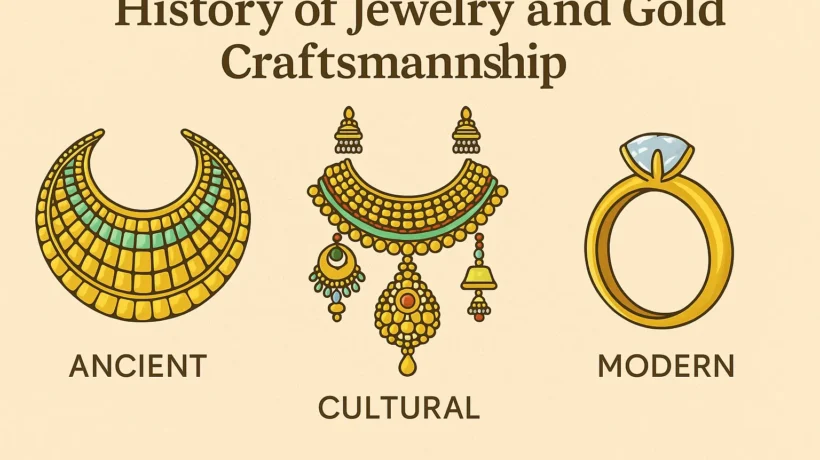
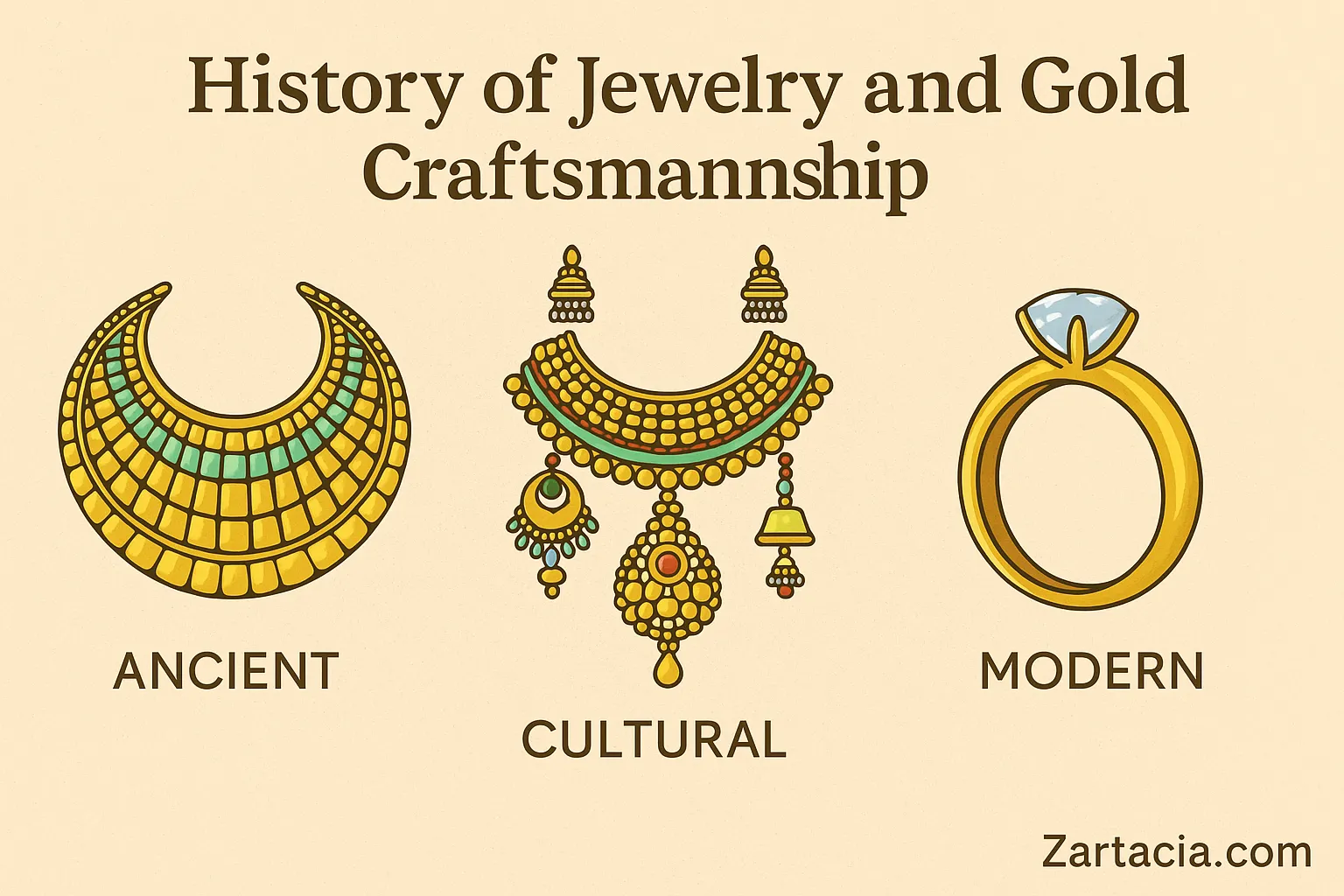
Jewelry is more than adornment—it is a mirror of culture, history, and human expression. Among all metals, gold has reigned supreme in the art of jewelry-making for thousands of years. From ancient crowns and temple ornaments to modern necklaces and wedding rings, gold jewelry reflects beauty, power, and prestige.
Gold’s malleability, shine, and resistance to tarnish made it the preferred choice for craftsmen across civilizations. This article explores the fascinating journey of jewelry and gold craftsmanship through the ages, highlighting how artistry evolved and why gold remains timeless.
Jewelry in Ancient Civilizations
Egyptian Gold Craftsmanship
Egypt was the cradle of gold jewelry. Pharaohs wore crowns, necklaces, and bracelets crafted from pure gold. Tombs like that of Tutankhamun revealed breathtaking ornaments, demonstrating not only wealth but also religious symbolism. Gold was believed to represent eternal life, making it sacred in rituals.
Mesopotamia and Indus Valley
In Mesopotamia and the Indus Valley, gold beads and pendants decorated kings and queens. Gold was often combined with lapis lazuli, carnelian, and other stones, creating colorful designs. These ornaments symbolized status and divine protection.
Greece and Rome
Greek and Roman jewelers refined techniques like engraving, filigree, and granulation. Jewelry served as a symbol of prosperity, while rings often indicated rank or political authority. Roman brides received golden jewelry as part of dowry traditions.
👉 Ancient civilizations showed that jewelry was not only fashion—it was spiritual, political, and cultural identity.
Medieval and Renaissance Gold Jewelry
Medieval Europe
During the medieval era, jewelry became linked to the Church and nobility. Gold crosses, reliquaries, and jeweled crowns symbolized spiritual devotion. Guilds of goldsmiths emerged, setting high standards for purity and skill.
Renaissance Period
The Renaissance brought innovation and extravagance. Goldsmiths in Italy, France, and Spain produced intricate works influenced by art and architecture. Necklaces, brooches, and signet rings became fashionable among the wealthy elite. Gold jewelry was no longer just for kings—it became accessible to merchants and the rising middle class.
👉 Gold craftsmanship flourished as artistry merged with science and fashion.
Jewelry in Asian and Islamic Traditions
Islamic World
The Islamic era enriched jewelry-making with calligraphy, geometric patterns, and floral designs. Gold dinars were melted into ornaments, while bracelets, anklets, and earrings symbolized wealth and social status. Scholars debated the permissibility of gold for men, while women adorned themselves lavishly during celebrations.
South Asia
In India and the subcontinent, gold jewelry became part of daily culture. From Mughal courts to village weddings, gold symbolized prosperity. Bridal sets, bangles, and nose rings became essential, often passed down generations as family heritage.
China and East Asia
Chinese craftsmen combined gold with jade, pearls, and cloisonné techniques. Gold hairpins, dragon-shaped pendants, and symbolic ornaments reflected harmony, fortune, and tradition.
👉 Asian traditions highlighted gold as both a personal ornament and a cultural necessity.
Modern Jewelry and Gold Craftsmanship
Industrial Revolution and Beyond
By the 19th century, technology transformed goldsmithing. Machines allowed mass production, making gold jewelry more affordable. However, handcrafted pieces remained prized for their artistry.
20th Century
The Art Deco movement introduced bold geometric designs, while global brands like Cartier and Tiffany elevated gold jewelry into luxury fashion. In the 20th century, gold jewelry became not just a tradition but also a fashion statement.
Today’s Jewelry Industry
Modern jewelers blend tradition with technology. Computer-aided design (CAD), laser engraving, and innovative alloys create new styles. Minimalist jewelry, gold-plated accessories, and designer collections show how versatile gold remains in fashion.
👉 Gold continues to be the foundation of elegance, adapting to new trends while preserving ancient values.
The Art of Gold Craftsmanship
Gold craftsmanship is both a science and an art.
-
Techniques: Filigree, embossing, stone-setting, enameling, and hand-carving.
-
Goldsmith’s Role: A blend of creativity, patience, and precision.
-
Cultural Variations: Each region added unique styles—Islamic calligraphy, Indian bridal jewelry, European crowns.
Goldsmiths are not merely artisans—they are storytellers in metal.
Extra Strong Paragraphs (SEO & Readability)
The Timeless Appeal of Gold Jewelry
Moreover, gold jewelry holds emotional and financial value. In addition to beauty, it represents investment and security. As a result, families worldwide continue to treasure gold ornaments across generations.
Cultural Identity in Ornaments
On the other hand, jewelry is more than decoration. Therefore, it communicates culture, religion, and status. As a result, gold jewelry is as much about identity as it is about beauty.
Gold Craftsmanship as Heritage
In addition, goldsmithing techniques have been passed down for centuries. Consequently, modern jewelers still preserve ancient artistry, blending it with innovation to meet today’s demand.
Conclusion
The history of jewelry and gold craftsmanship is a story of beauty, culture, and human creativity. From the Pharaohs of Egypt to modern fashion houses, gold jewelry has represented wealth, spirituality, and tradition. Despite centuries of change, its shine has never dimmed.
Gold craftsmanship remains a bridge between past and present, carrying forward traditions while embracing innovation. Indeed, gold jewelry is not just an accessory—it is a legacy.
FAQs
Q1. Why is gold preferred in jewelry?
Because of its shine, malleability, and resistance to tarnish.
Q2. Which civilization first mastered gold jewelry?
The Egyptians are among the earliest to perfect gold craftsmanship.
Q3. How did Islamic culture influence gold jewelry?
Through calligraphy, floral motifs, and a balance between faith and adornment.
Q4. Is modern gold jewelry still handcrafted?
Yes, despite machines, handcrafted gold remains highly valued.
Q5. What makes gold jewelry timeless?
Its blend of beauty, cultural identity, and investment value.
🟢 Internal Linking Suggestions
-
Link to “Gold in Islamic Society – Permissibility and Traditions” (Article no 20 upcoming)
-
Link to “Role of Gold in Festivals and Social Culture” (Article no 24 upcoming)
🟢 External Linking Suggestions
🟢 Video Link
The History of Gold Jewelry | Documentary
Student Section
📖 Key Points (Summary for Students)
-
Egyptians pioneered advanced gold jewelry.
-
Greeks, Romans, and Indians added unique cultural styles.
-
Islamic jewelry featured calligraphy and floral designs.
-
Modern gold jewelry blends tradition with technology.
-
Gold jewelry is both cultural identity and financial security.
📝 Student Activity / Quick Quiz
-
Name one technique used in ancient gold craftsmanship.
-
True/False: The Art Deco era introduced geometric gold jewelry designs.
-
Why is gold considered timeless in jewelry?
-
How did Islamic jewelers influence design?
(Possible Answer for Q2: True)
🔑 Difficult Words and Meanings (Urdu)
| Word | Meaning in Urdu |
|---|---|
| Malleability | پھیلنے کی صلاحیت |
| Filigree | باریک سنہری ڈیزائن |
| Ornaments | زیورات |
| Extravagance | فضول خرچی / نمود و نمائش |
| Heritage | ورثہ |
| Artisan | دستکار / ہنر مند |
| Enameling | رنگ بھرنے کی کاریگری |
| Legacy | میراث / ورثہ |
| Ornamentation | آرائش |
| Precision | باریکی / درستگی |