
What is Blockchain Technology?
Blockchain is often described as the backbone of cryptocurrency, but it is much more than that. At its core, blockchain is a digital ledger that records transactions across a network of computers in a way that is secure, transparent, and nearly impossible to alter.
If you think about the traditional banking system, every bank has its own central database. In blockchain, instead of one central database, thousands of copies exist on different computers (nodes) across the world. This makes the system trustless — you don’t need to rely on a middleman.
How Blockchain Works in Simple Terms
Imagine you and your friends are keeping track of who owes whom money. Instead of trusting one friend to keep the notebook, everyone has a copy of the notebook. Every time someone spends or receives money, the new entry must match across all copies. If even one copy disagrees, the transaction is rejected.
That’s exactly how blockchain works.
-
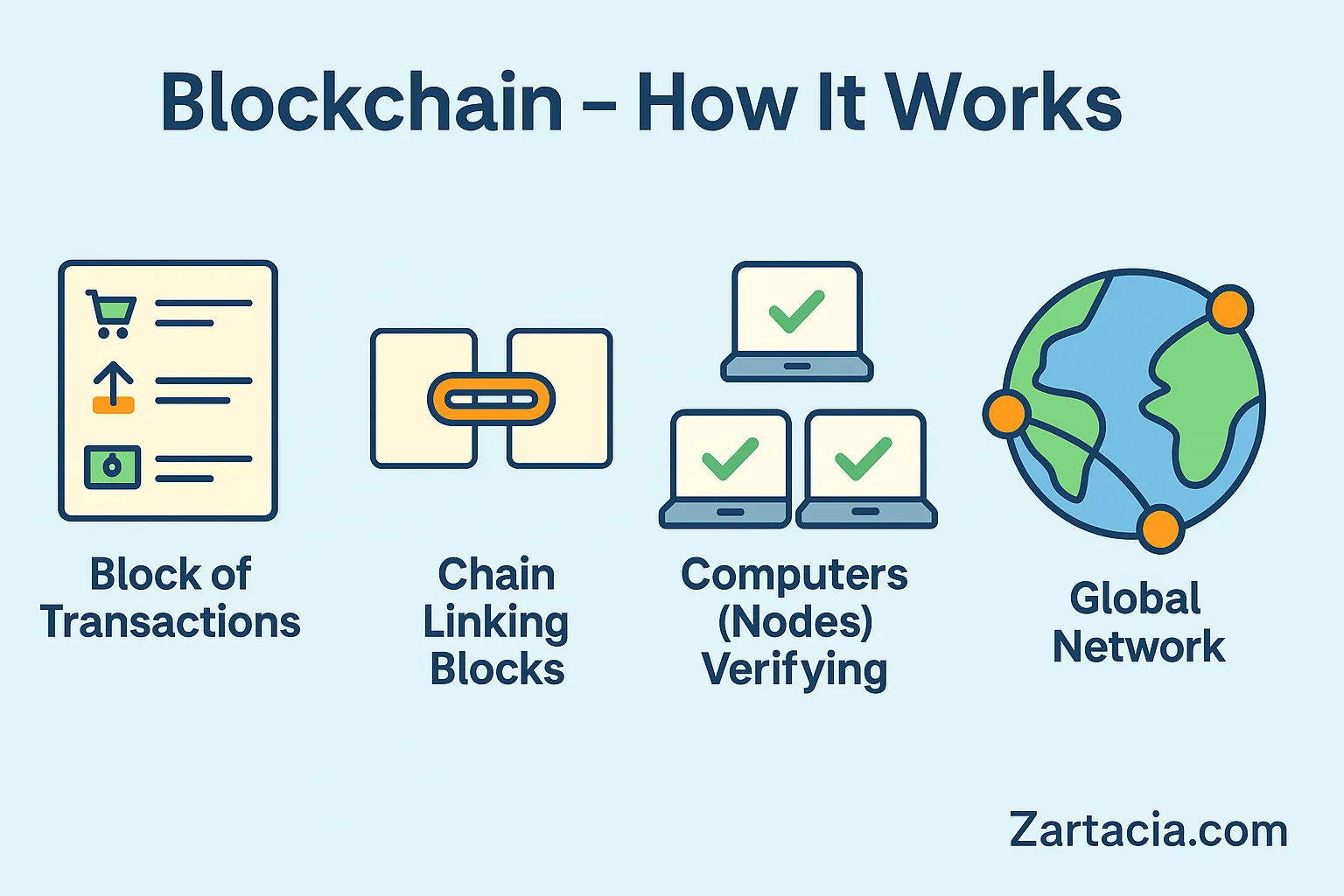
A new transaction is created (for example: A sends Bitcoin to B).
-
This transaction is grouped with others into a “block.”
-
The block is verified by multiple computers through a process called consensus.
-
Once verified, the block is added to the chain, forming a permanent record.
Key Features of Blockchain
-
Decentralization: No single authority like a bank controls the system.
-
Transparency: Every transaction is visible on the blockchain for anyone to verify.
-
Security: Cryptography ensures transactions are protected against hacking.
-
Immutability: Once recorded, data cannot be changed or deleted.
Blockchain vs Traditional Databases
Traditional databases are controlled by a single entity (e.g., a bank or company). If that entity is compromised, the whole system is at risk.
Blockchain, on the other hand, distributes trust. It’s like having a lock that requires thousands of keys — and unless everyone agrees, nothing can be changed.
Real-World Applications Beyond Cryptocurrency
Although blockchain started with Bitcoin, it’s now being used in many industries:
-
Finance: Faster and cheaper cross-border payments.
-
Healthcare: Secure patient records accessible across hospitals.
-
Supply Chain: Tracking products from factory to consumer for authenticity.
-
Voting Systems: Transparent and tamper-proof digital voting.
-
Real Estate: Recording property ownership without intermediaries.
Advantages and Limitations
Advantages:
-
High security
-
Reduced fraud
-
Transparency
-
Efficiency in transactions
Limitations:
-
High energy consumption (especially Proof of Work systems like Bitcoin)
-
Scalability issues (handling thousands of transactions per second is still challenging)
-
Regulatory uncertainty in many countries
Student Section
Summary
Blockchain is a digital ledger technology that records transactions in a secure, transparent, and decentralized way. It eliminates the need for middlemen, making financial systems more open and trustworthy.
Quiz
-
What is blockchain often compared to?
-
How does decentralization make blockchain secure?
-
Can blockchain records be changed after confirmation?
-
Name two industries other than crypto using blockchain.
-
What is the role of “nodes” in blockchain?
Difficult Words
| Word | Meaning in Urdu |
|---|---|
| Ledger | کھاتہ / رجسٹر |
| Consensus | اتفاق رائے |
| Transparency | شفافیت |
| Immutable | ناقابلِ تغیر |
| Distributed | تقسیم شدہ |
FAQs
Q1. Is blockchain only used for cryptocurrency?
No, blockchain is also used in healthcare, supply chains, voting, and more.
Q2. Can blockchain be hacked?
It’s extremely difficult due to its decentralized nature, but vulnerabilities may exist in applications built on top of it.
Q3. Who invented blockchain?
Blockchain was first conceptualized in 2008 by Satoshi Nakamoto, alongside Bitcoin.
Q4. Is blockchain energy-efficient?
Not always. Proof of Work consumes a lot of energy, but newer methods like Proof of Stake are much more efficient.