Introduction
Cryptocurrency has given people financial freedom, but it has also opened the door for scammers. Every year, billions of dollars are lost to crypto scams. From fake giveaways to phishing attacks, scammers use clever tricks to fool beginners and even experienced investors.
Common Types of Crypto Scams
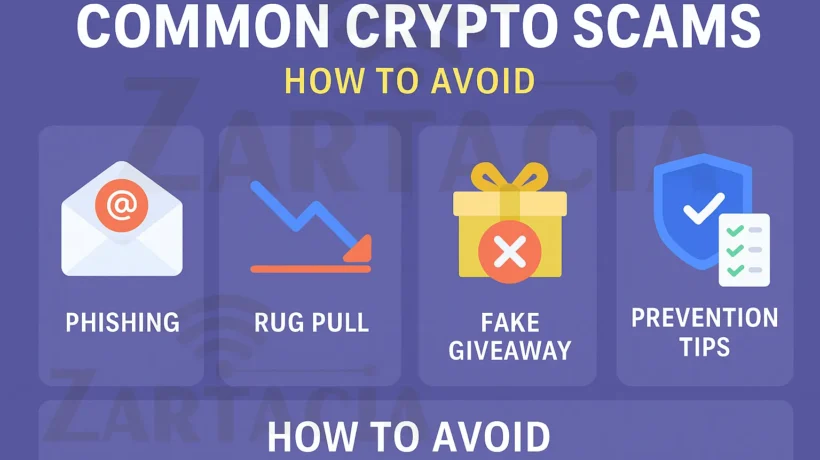
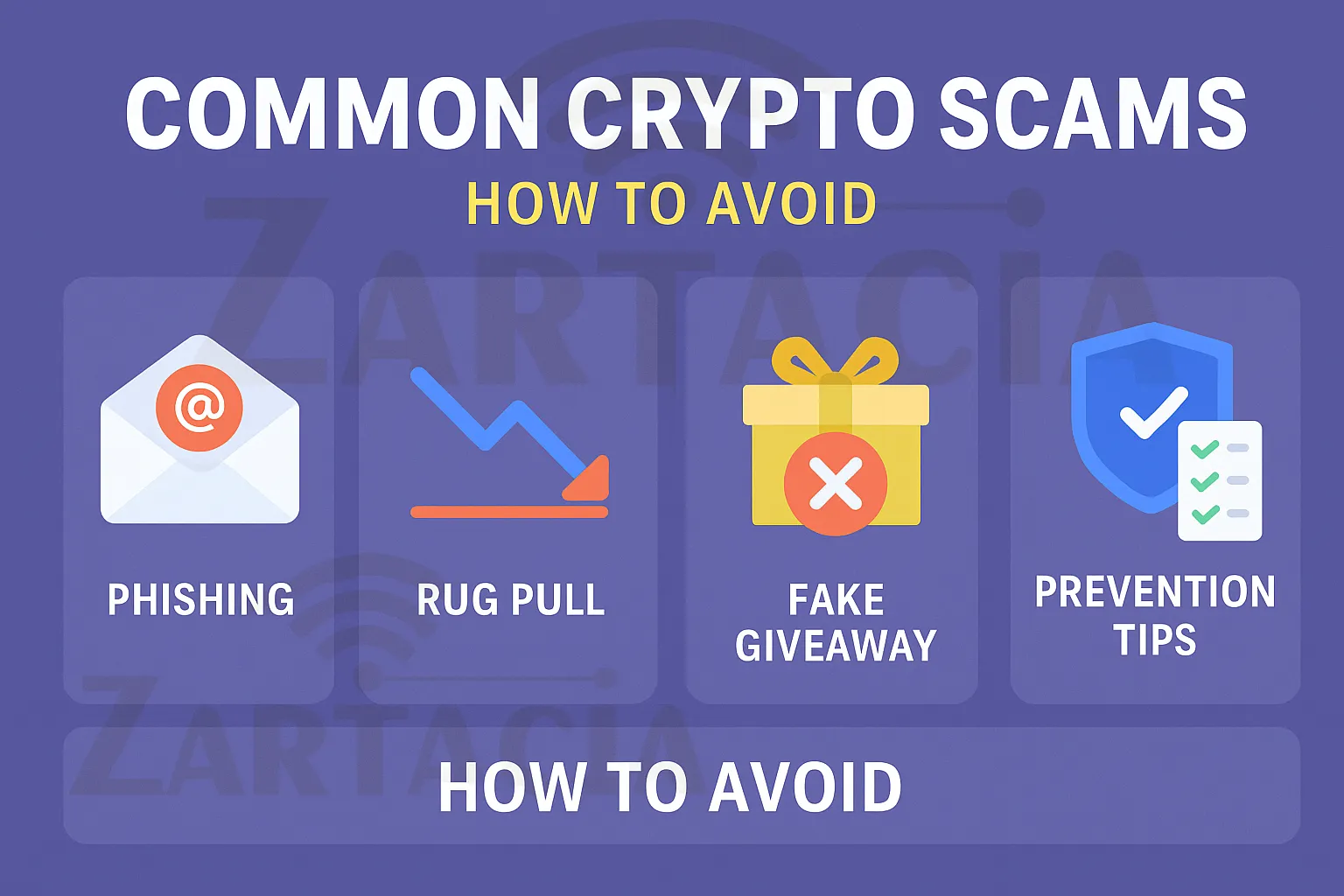
Phishing Attacks
Scammers send fake emails or websites that look like official wallets or exchanges to steal your login or seed phrase.
Rug Pulls
Developers launch a new token, hype it on social media, attract investors, and then suddenly withdraw all funds, leaving the token worthless.
Fake Giveaways
“Send 1 BTC and receive 2 BTC back” — these offers are always scams.
Ponzi Schemes
Scams that promise guaranteed profits if you bring new people into the system.
Impersonation Scams
Fraudsters pretend to be famous people or support staff to trick you into sending money.
How to Avoid Crypto Scams
-
Never Share Your Seed Phrase: If someone asks for it, it’s a scam.
-
Check URLs Carefully: Fake websites often look 90% like the real one.
-
Avoid Unrealistic Promises: If it sounds too good to be true, it probably is.
-
Use Reputable Exchanges & Wallets: Stick to trusted platforms.
-
Do Your Own Research (DYOR): Don’t trust hype or random tips.
Student Section
Summary
Crypto scams are increasing rapidly. Common scams include phishing, rug pulls, fake giveaways, and Ponzi schemes. Stay safe by protecting your keys, checking URLs, and using trusted platforms.
Quiz
-
What is a rug pull?
-
Give an example of a fake crypto scam.
-
What should you never share with anyone?
-
How can you detect a phishing website?
-
Why is DYOR important?
Difficult Words
| Word | Meaning in Urdu |
|---|---|
| Phishing | جعلی ای میل یا ویب سائٹ |
| Rug Pull | اچانک فراڈ کرکے پیسہ نکالنا |
| Ponzi Scheme | نئے لوگوں سے رقم لے کر پرانوں کو دینا |
| Impersonation | کسی اور کا روپ دھارنا |
| Giveaway | انعامی فراڈ |
FAQs
Q1. What is the most common crypto scam?
Phishing and rug pulls are among the most common.
Q2. Can hardware wallets be hacked?
They are very secure, but phishing can still trick users.
Q3. Are all new tokens scams?
No, but you should research before investing.
Q4. How can beginners stay safe?
By sticking to trusted wallets, doing research, and never sharing private keys.