
Future of Gold and Alternatives
Gold has always been the foundation of wealth and trust. But in today’s digital and fast-changing world, new competitors like cryptocurrencies and alternative precious metals challenge its position. The key question is: Will gold remain the ultimate store of value, or will alternatives take over in the global economy?
Why Gold Will Remain Relevant
Despite the rise of cryptocurrencies and industrial metals, gold remains irreplaceable. Furthermore, it has weathered every financial crisis and still emerges as the safe haven of choice. In addition, unlike digital currencies, gold does not depend on electricity, servers, or internet access, making it a universal asset in all conditions.
The Balance Between Tradition and Innovation
On the other hand, ignoring the potential of alternatives would be unwise. Cryptocurrencies, silver, and platinum each have roles to play. Therefore, the future of wealth will likely combine gold’s stability with digital innovation. As a result, investors who balance traditional gold holdings with new alternatives will be better prepared for tomorrow’s economy.
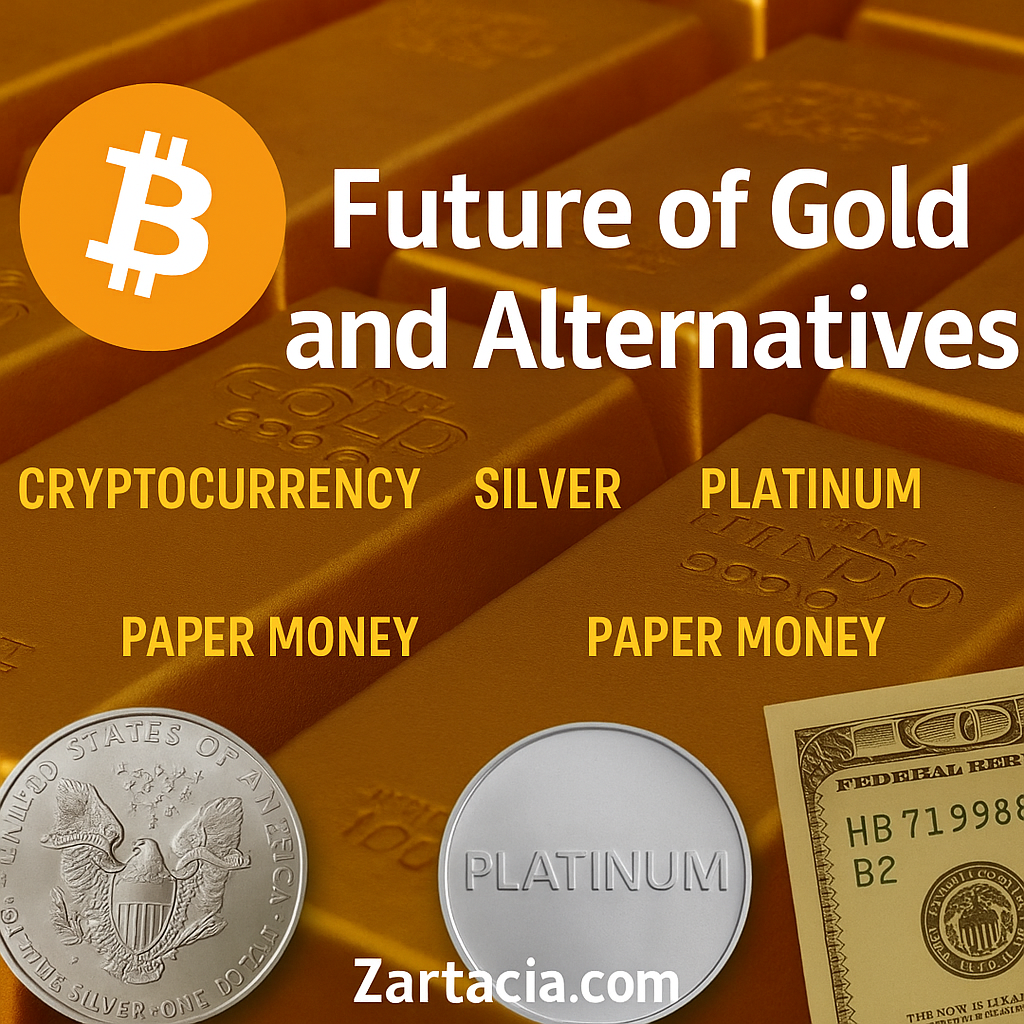
Digital Currencies vs Gold
Cryptocurrencies, especially Bitcoin, are often called “digital gold.”
-
Bitcoin: Limited supply (21 million coins), decentralized, and portable.
-
Stablecoins: Pegged to fiat currencies or even gold reserves.
-
Gold-backed Tokens: Digital assets supported by physical gold.
👉 While crypto offers speed and innovation, gold provides stability and trust.
Silver vs Gold
Silver has long been considered gold’s “little brother.”
-
Advantages: More affordable, widely used in industries (solar panels, electronics).
-
Disadvantages: More volatile and less trusted as a long-term store of value.
-
Comparison: Gold is a safe haven, while silver is more industrial.
H2: Platinum and Other Precious Metals
Platinum, palladium, and rhodium are rising in demand.
-
Platinum: Used in jewelry and catalytic converters in vehicles.
-
Palladium: Crucial for the automotive industry.
-
Rhodium: Extremely rare and valuable.
👉 These metals may shine in industries, but none rival gold’s global acceptance.
H2: Gold vs Paper Money
-
Paper Money: Easily printed, leading to inflation and loss of value.
-
Gold: Retains purchasing power over centuries.
-
Example: A gold coin 100 years ago could buy a fine suit; today, it still can.
👉 Gold resists inflation where paper money fails.
H2: Gold vs Cryptocurrency
-
Gold: Stable, universally trusted, physical, and historically proven.
-
Crypto: Highly volatile, technology-dependent, and risky.
-
Example: Bitcoin can crash 50% in weeks, but gold rarely shows such extreme movements.
👉 Stability makes gold safer, while volatility makes crypto speculative.
H2: The Future Role of Gold in Global Economy
-
Central banks continue to buy gold to strengthen reserves.
-
Investors rely on gold during crises (wars, inflation, pandemics).
-
Digital gold (tokens, ETFs) combines tradition with technology.
👉 Gold will remain the anchor of financial security, but digital innovations will reshape how it is traded.
Conclusion
The future of gold lies in its balance with alternatives. Cryptocurrencies may bring speed, silver and platinum may drive industries, but gold’s stability and trust cannot be replaced. In the coming decades, gold will continue to serve as a bridge between the traditional economy and modern innovations.
FAQs
Q1. Will cryptocurrencies replace gold?
Unlikely. Cryptocurrencies are volatile, while gold is stable and universally trusted.
Q2. Why is silver considered an alternative to gold?
Because it is cheaper and widely used in industries, but less stable as wealth storage.
Q3. Which is safer: gold or Bitcoin?
Gold is safer due to stability, while Bitcoin is more speculative.
Q4. Do central banks still rely on gold?
Yes, central banks globally hold large gold reserves for stability.
Q5. Can platinum replace gold in value?
No, platinum is valuable in industries but lacks gold’s universal trust.
🟢 Internal Linking Suggestions
-
Link to “Gold and Science” (Part VII)
-
Link to “Stories, Legends, and Facts of Gold” (Part IX)
