
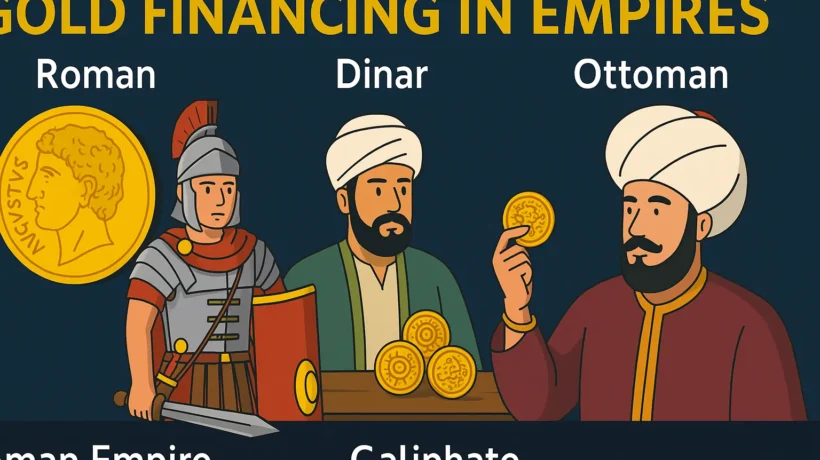
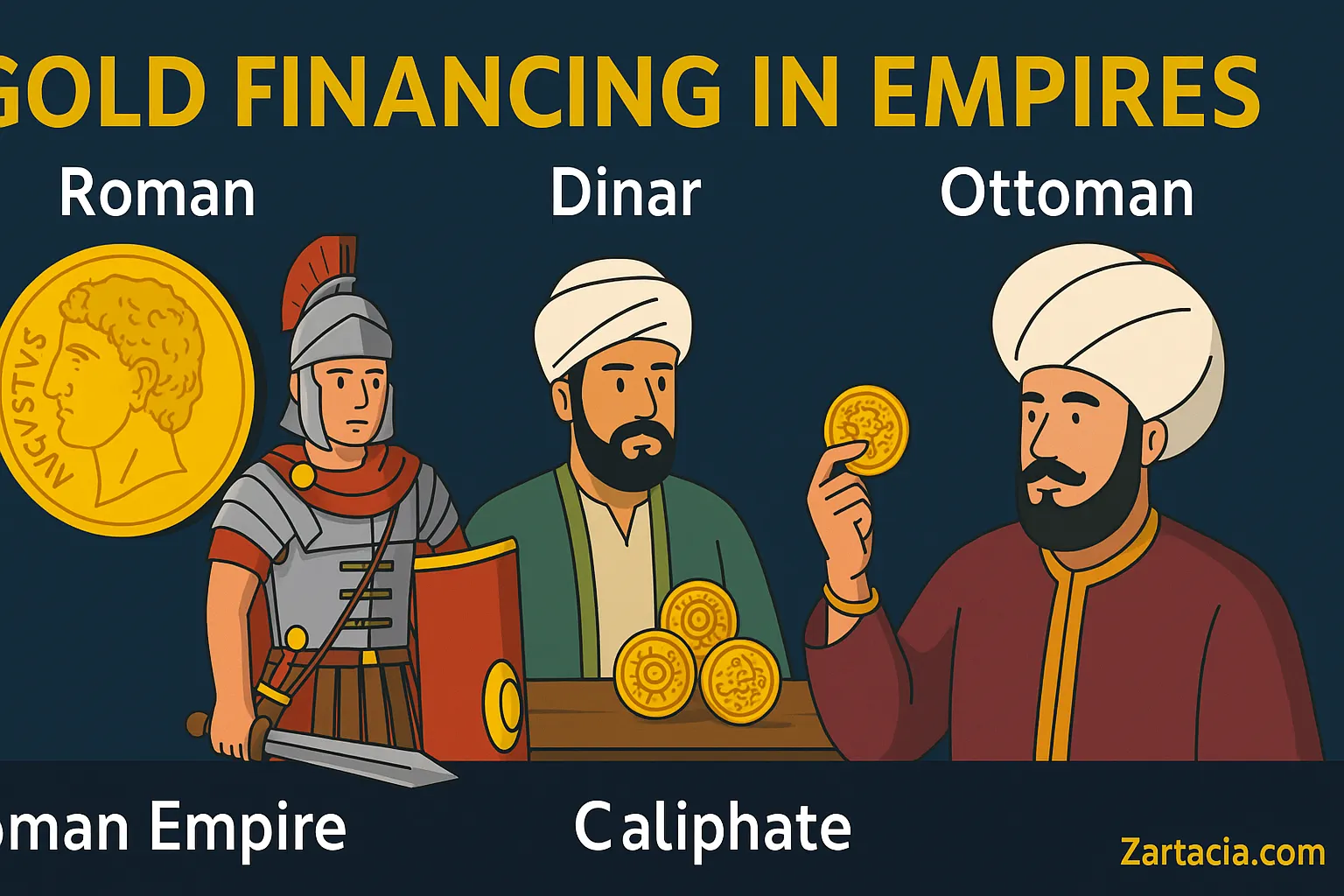
Gold Financing in Empires – Rome, Abbasids, Ottomans
Empires were not built on power alone—they were built on gold. From raising armies tpo building monuments, gold was the financial backbone of every great civilization. Rome, the Abbasid Caliphate, and the Ottomans used gold not only as money but also as a strategic tool of governance, diplomacy, and expansion.
🟡 Rome – Gold as the Backbone of an Empire
-
The Roman Empire minted gold coins such as the Aureus and later the Solidus, which became international standards.
-
Soldiers were paid in gold, keeping armies loyal and powerful.
-
Trade routes across Europe, Africa, and Asia revolved around Roman gold currency.
-
Gold financed roads, aqueducts, and the Colosseum—symbols of Roman might.
💡 Lesson: Rome showed how stable gold coinage could unify diverse territories.
🟡 Abbasid Caliphate – Gold in the Islamic Golden Age
-
Introduced the Dinar, a pure gold coin, which became a trusted medium of exchange from Spain to India.
-
Gold trade flourished along the Silk Road, connecting Baghdad with China and Europe.
-
Financing libraries, mosques, and universities—gold enabled the flowering of science and culture.
-
State revenues in gold funded vast armies and the defense of the Islamic world.
💡 Example: The Abbasid Bayt al-Mal (treasury) used gold to support scholars like Al-Khwarizmi and physicians in Baghdad.
🟡 Ottoman Empire – Gold as Global Currency
-
The Ottomans minted the Sultani, a gold coin widely accepted in Europe, the Middle East, and Asia.
-
Controlled trade hubs like Istanbul, where gold flowed between continents.
-
Gold financed monumental architecture like the Süleymaniye Mosque and imperial palaces.
-
Diplomacy: Ottoman gold coins and gifts cemented alliances with European powers.
💡 Lesson: Gold gave the Ottomans not only military power but also cultural prestige.
🟡 Symbolism and Lessons
-
Rome: Gold as military and economic backbone.
-
Abbasids: Gold as trade, knowledge, and culture enabler.
-
Ottomans: Gold as diplomacy and global prestige.
👉 Across all empires, gold meant stability, loyalty, and influence.
🎓 Student Section
Summary (5 Bullets):
-
Rome used gold coins (Aureus, Solidus) to finance armies and projects.
-
Abbasids spread the Dinar across the Silk Road.
-
Gold funded learning, culture, and Islamic Golden Age.
-
Ottomans used gold (Sultani) for trade and diplomacy.
-
Empires rose on the strength of gold-backed economies.
Quiz (5 Questions):
-
Which gold coin did Rome use?
-
What was the Abbasid gold coin called?
-
How did gold help Abbasids support science?
-
What was the Ottoman gold coin named?
-
Why was gold essential in diplomacy?
Difficult Words (Glossary Table):
| Word | Meaning in Urdu |
|---|---|
| Aureus | رومی سونے کا سکہ |
| Dinar | اسلامی سنہری سکہ |
| Sultani | عثمانی سلطنت کا سونے کا سکہ |
| Treasury | خزانہ |
| Diplomacy | سفارتکاری / تعلقات |
❓ FAQs
Q1: Why was gold so important in ancient empires?
Because it paid soldiers, built infrastructure, and secured trade.
Q2: Did the Abbasid Dinar influence Europe?
Yes, it was highly trusted and circulated across continents.
Q3: How did the Ottomans use gold in diplomacy?
By gifting coins and treasures to allies, strengthening political ties.
Q4: What do these examples teach us today?
That strong economies are built on reliable currency and fair distribution.