
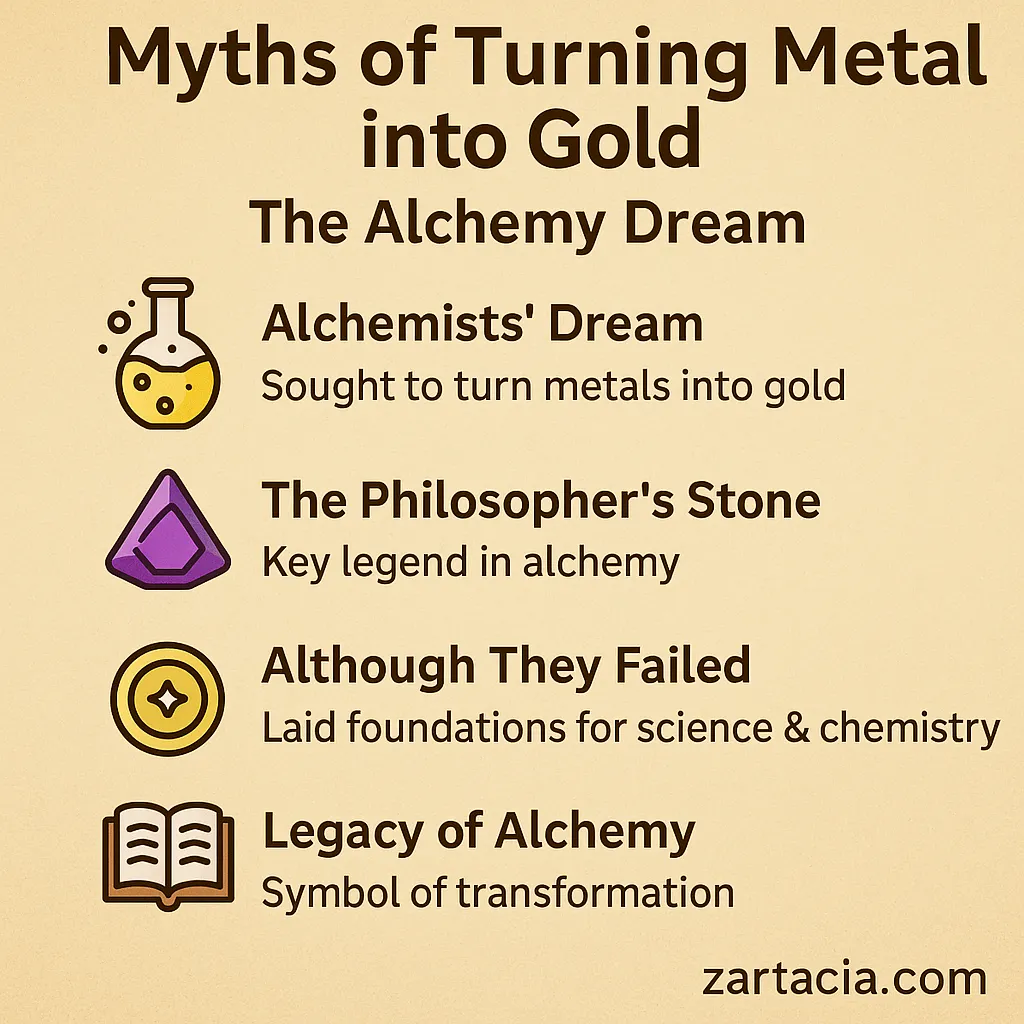
 Myths of Turning Metal into Gold – The Alchemy Dream
For centuries, the idea of turning ordinary metals into gold captured the imagination of kings, scholars, and dreamers. This pursuit—known as alchemy—was part science, part philosophy, and part legend. Though the dream never came true, it left a profound mark on human history and the development of modern science.
This article uncovers the myths of alchemy, its legendary goals, and how the dream of turning metal into gold continues to inspire.
The Dream of Alchemists
-
Alchemists in Europe, China, and the Islamic world believed in the possibility of transformation.
-
The Philosopher’s Stone was said to be the key to converting lead or copper into gold.
-
They sought not just wealth, but also spiritual enlightenment.
Why People Believed in Alchemy
-
Lack of scientific knowledge made such transformations seem possible.
-
Legends and folktales fueled hope of magical substances.
-
Kings sponsored alchemists, hoping for unlimited wealth.
The Legacy of Alchemy
-
Though they failed to create gold, alchemists pioneered experimentation.
-
Their work laid the foundation for modern chemistry and metallurgy.
-
Even today, “alchemy” symbolizes mysterious transformation.
Jabir ibn Hayyan (Geber), an Islamic scholar, is often called the father of chemistry. While he worked within the framework of alchemy, his methods advanced scientific thinking.
Student Section
Summary:
Alchemy’s dream of turning metals into gold was a myth, but it pushed human curiosity and led to discoveries in science and chemistry.
Quiz:
-
What did alchemists hope to create to turn metals into gold?
-
Why did kings support alchemy?
-
Did alchemists succeed in making gold?
-
Who is considered the father of chemistry?
Difficult Words Table:
| Word | Meaning in Urdu |
|---|---|
| Alchemy | قدیم علم کیمیا |
| Philosopher’s Stone | فلسفیوں کا پتھر (افسانوی) |
| Transformation | تبدیلی / دگرگونی |
| Metallurgy | دھاتوں کا علم |
FAQs
Q1: Could alchemists really turn metals into gold?
No, it was scientifically impossible.
Q2: What was the Philosopher’s Stone?
A mythical substance believed to transform metals into gold.
Q3: Did alchemy influence real science?
Yes, it contributed to the birth of modern chemistry.
Q4: Why is alchemy still remembered?
Because it represents human imagination and the pursuit of transformation.