
SEO is no longer just about keywords and backlinks. In 2025, Google places strong emphasis on branding and authority as ranking factors. Businesses that are recognized, trusted, and well-branded have a significant advantage in search results.
When users consistently search for a brand, engage with it online, and share its content, Google interprets this as a signal of trust. Authority works in a similar way—websites with strong reputations and recognized expertise rank higher because they provide reliable information.
This article explains the role of branding and authority in SEO, why they matter, and how businesses can build them to achieve long-term success in search engine rankings.
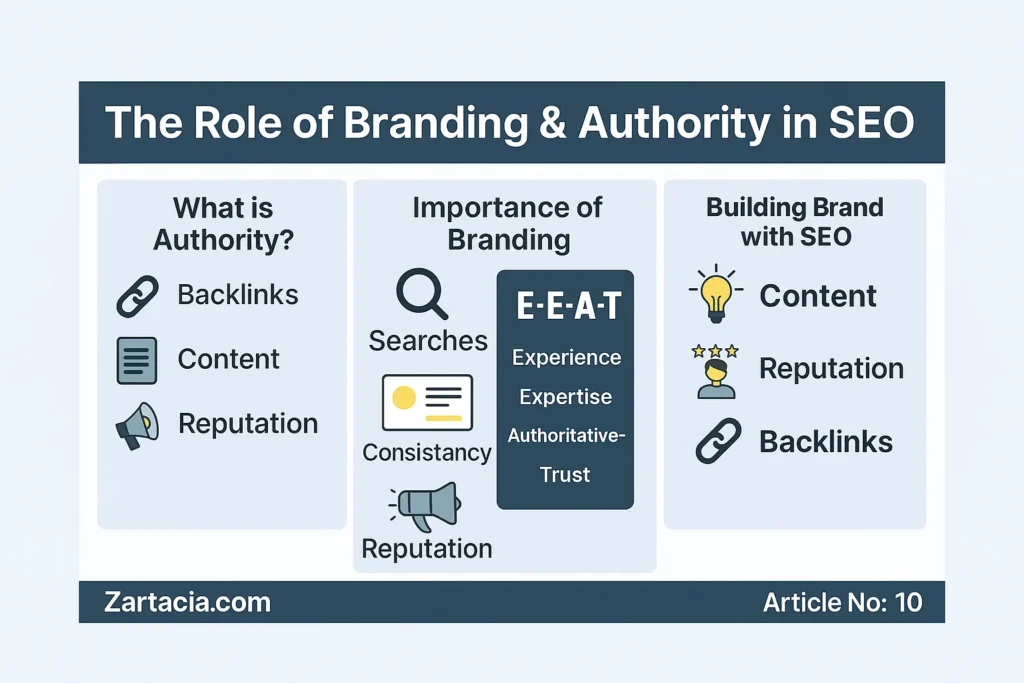
What is Authority in SEO?
Authority in SEO refers to how trustworthy and credible a website is in the eyes of search engines and users. Websites with high authority are seen as experts in their niche and therefore rank higher.
Factors that determine authority include:
- Backlinks from trusted sources – Links from reputable websites boost credibility.
- Content quality and depth – Well-researched, original, and helpful content establishes expertise.
- Engagement signals – High click-through rates, low bounce rates, and positive user behavior.
Example: A medical website with references from hospitals and research institutes will rank higher than a new blog with no references.
Importance of Branding
Branding plays a critical role in SEO because Google considers how people interact with your brand online. A strong brand creates trust not only among customers but also with search engines.
Key branding signals include:
- Brand searches – When people search for your business name (e.g., “Zartacia hosting”), Google sees it as a trust signal.
- Consistent identity – Logos, colors, and messaging across platforms build recognition.
- Online reputation – Positive reviews and mentions across the web improve authority.
Example: Companies like Nike or Apple dominate search results not only because of SEO tactics but because their brand is globally recognized and trusted.
How Google Measures Trust
Google evaluates trust through various signals, often summarized as E-E-A-T (Experience, Expertise, Authoritativeness, Trustworthiness).
- Experience → Does the content come from someone with real-world knowledge?
- Expertise → Is the website run by experts in the field?
- Authoritativeness → Do other reputable sites reference or link to it?
- Trustworthiness → Does the site provide accurate, safe, and transparent information?
For example, a finance blog linking to government resources is more trustworthy than one with no references.
Building Your Brand with SEO
Branding and SEO work together to build authority. Here are ways businesses can strengthen both:
- Content Marketing – Publish high-quality content that answers customer questions.
- Consistency Across Platforms – Use the same branding on your website, social media, and ads.
- Reputation Management – Encourage reviews, respond to feedback, and showcase testimonials.
- Thought Leadership – Share expert opinions, case studies, and original research.
- Backlinks & Mentions – Collaborate with trusted sites to gain authoritative backlinks.
Case Study: A small IT company in Karachi consistently published guides, earned backlinks from news sites, and built a strong LinkedIn presence. Within a year, it became a recognized name in its niche, ranking higher than larger competitors.
Student Section
✅ Summary (150 words)
Branding and authority are essential for SEO success in 2025. Authority is built through backlinks, quality content, and user engagement, while branding involves reputation, recognition, and trust signals like brand searches. Google now focuses on E-E-A-T (Experience, Expertise, Authoritativeness, Trustworthiness) to determine which websites deserve top rankings. Businesses that create valuable content, maintain a consistent identity, and manage their reputation effectively are more likely to rank well. Branding ensures people remember and trust your company, while authority shows Google that your site is reliable and expert-driven. Together, they create a powerful SEO strategy that delivers long-term growth. Ignoring branding and authority means losing visibility and credibility online. In 2025, businesses that invest in both will dominate search results and attract loyal customers.
📝 Quiz
- What does authority in SEO mean?
Answer: It means credibility and trust in the eyes of Google and users. - What are branding signals in SEO?
Answer: Brand searches, consistent identity, and online reputation. - What is E-E-A-T in SEO?
Answer: Experience, Expertise, Authoritativeness, Trustworthiness. - How can businesses build brand trust?
Answer: By publishing quality content, encouraging reviews, and staying consistent. - Why do strong brands rank higher?
Answer: Because Google rewards trust and recognition.
📘 Difficult Words Table
| Word | Meaning in Urdu |
|---|---|
| Credibility | بھروسہ / وقار |
| Consistent | مستقل / یکساں |
| Recognition | پہچان |
| Authoritativeness | اختیار / ماہر حیثیت |
| Reputation | شہرت / نیک نامی |
FAQs
Q1: Can a small business build authority in SEO?
Yes, by publishing quality content and earning trusted backlinks.
Q2: Does branding really affect SEO rankings?
Yes, branding builds trust signals that Google uses to rank websites.
Q3: What role do reviews play in SEO?
Positive reviews improve reputation and increase local SEO visibility.
Q4: Is authority only about backlinks?
No, it also includes content quality, expertise, and trustworthiness.
📖 People are also reading
- “Importance of SEO for Small Businesses”
- “SEO vs Paid Ads – Which is Better?”
- “How Search Engines Work (Google, Bing, Yahoo)”
