

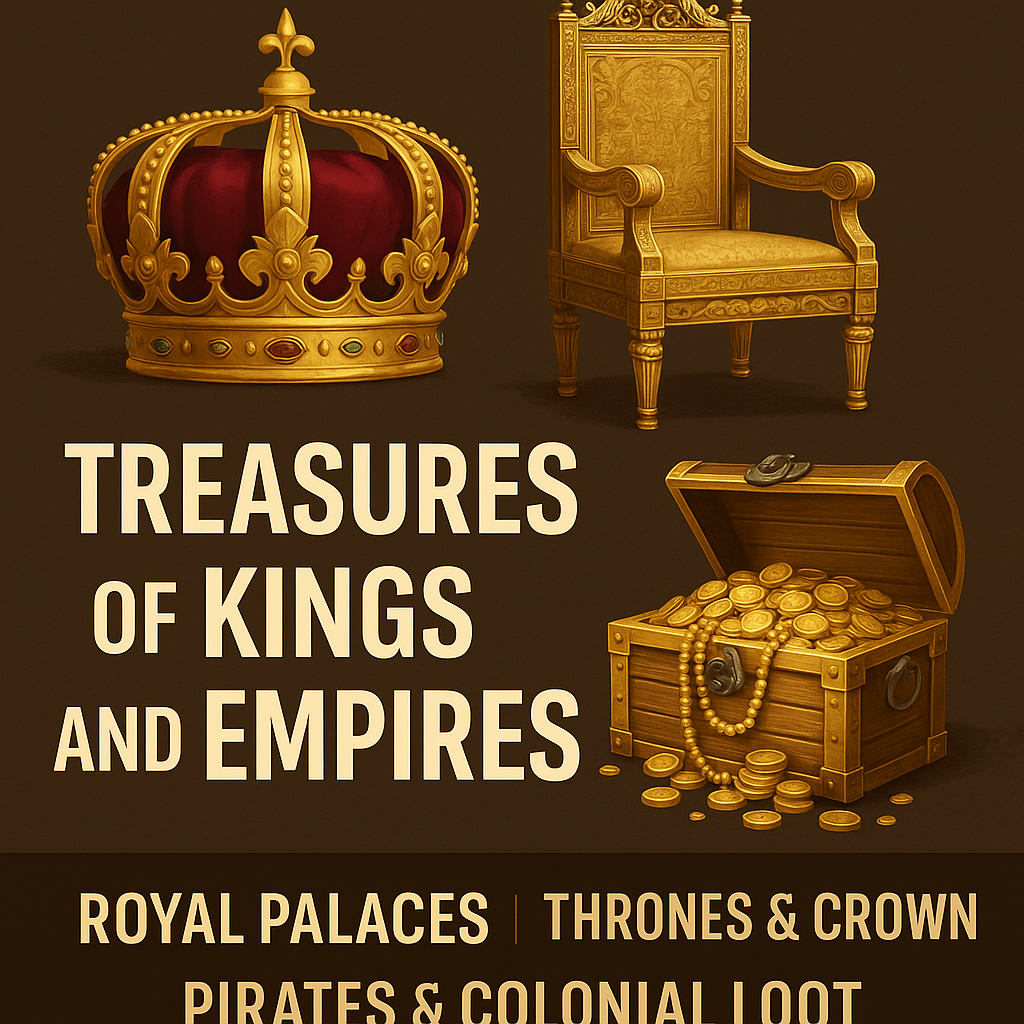
Treasures of Kings and Empires
Gold has always been the most sought-after prize for kings, emperors, and conquerors. From dazzling crowns to hidden war loot, golden thrones to pirate ships filled with treasures — history is filled with stories of rulers who amassed unimaginable wealth. These treasures not only reflected royal glory but also determined the rise and fall of empires.
Royal Treasuries and Palaces
-
Ancient Egyptian Pharaohs preserved gold in temples and pyramids.
-
Persian kings filled their palaces with ornaments and statues made of pure gold.
-
The Ottoman Sultans and Mughal Emperors decorated their palaces with golden artifacts and jewelry.
-
Gold was stored in royal treasuries, guarded like the soul of the kingdom.
👉 The wealth of a king was measured by the size of his golden collection.
Golden Thrones, Crowns, and Ornaments
-
The Throne of Tutankhamun and other Egyptian pharaohs were richly decorated with gold.
-
Crown Jewels of England include the famous Imperial State Crown adorned with gold and gems.
-
The Peacock Throne of the Mughal Empire was one of the most extravagant creations in world history, made with gold and precious stones.
-
Rulers gifted golden ornaments to allies and generals as rewards.
👉 Golden thrones and crowns were more than furniture; they were symbols of power and divine right.
War Booty and Gold Collections
Every conquest brought with it not just land but also gold:
-
Alexander the Great carried tons of gold from Persian palaces.
-
Roman generals returned with golden treasures from Greece and Egypt.
-
In the Middle Ages, armies looted gold from rival kingdoms.
-
War booty funded new armies, palaces, and expansion of empires.
Gold was the fuel of conquests.
Conquerors, Pirates, and Golden Ships
-
Spanish conquerors plundered vast amounts of gold from the Aztec and Inca empires in the Americas.
-
Pirates of the Caribbean became legends for capturing ships filled with gold coins and treasures.
-
Stories of sunken ships carrying gold still fascinate treasure hunters today.
-
The Spanish Galleons were notorious for transporting tons of gold back to Europe.
👉 Oceans and seas became the highways of golden adventures.
Colonial Looting and Transfer of Gold
The colonial era was one of the darkest chapters in gold history:
-
The British looted massive amounts of gold from India and other colonies.
-
African nations were stripped of their natural gold resources.
-
Colonial powers filled their treasuries while colonies were left poor.
-
Museums in Europe still display looted gold artifacts.
👉 Gold shifted from the East to the West, changing the balance of global power.
Conclusion
The treasures of kings and empires tell us one thing clearly: gold was not just wealth, but a weapon of power, prestige, and dominance. From crowns to pirate ships, from palaces to colonial loot, gold has been both a symbol of glory and a reason for oppression.
In the next post, we will explore Gold in Religion and Jurisprudence to understand its spiritual and ethical dimensions.
FAQs
Q1. What was the Peacock Throne?
A magnificent Mughal throne made of gold and jewels, symbolizing power and luxury.
Q2. Which empire looted gold from the Americas?
The Spanish conquered the Aztec and Inca empires, plundering their gold.
Q3. Why was gold important in wars?
It funded armies, palaces, and empire-building after victories.
Q4. What role did pirates play in gold history?
They captured gold-laden ships and hid treasures on islands and seas.
Q5. How did colonial powers loot gold?
They extracted gold from colonies like India and Africa, transferring it to Europe.
🟢 Internal Linking Suggestions
-
Link to “Gold as Jewelry and Culture” (Part IV)
-
Link to “Religious and Jurisprudential Aspects of Gold” (Part VI)
🟢 External Linking Suggestions
🟢 Video Link
The Great Gold Treasures of Kings and Empires | History Documentary
