

Introduction
Gold and the Environmental Debate
Gold is admired for its beauty and value, but its extraction often leaves behind hidden costs. Mining requires energy, water, and chemicals, which indirectly influence climate change.
Indirect Role of Gold in Global Warming
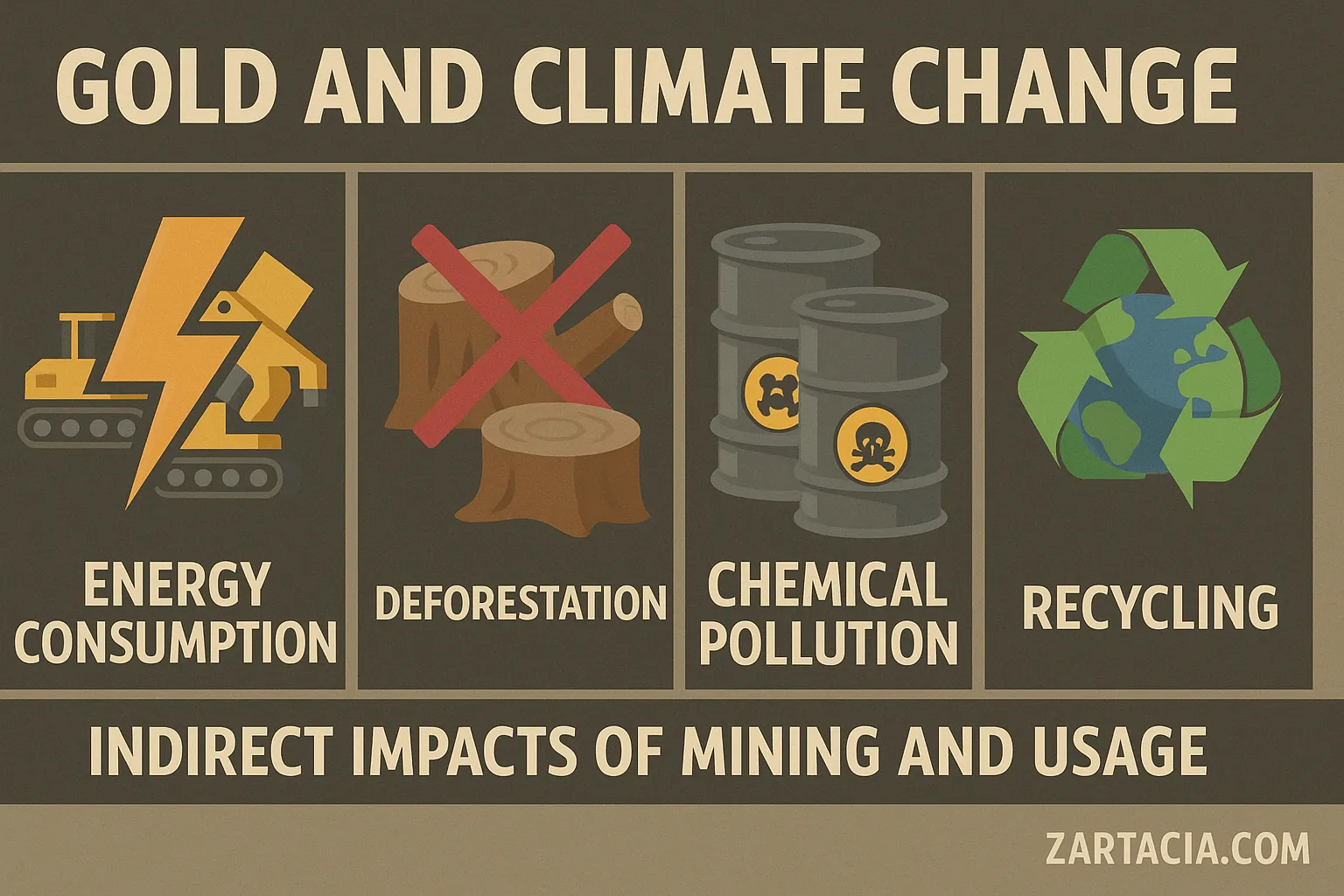
Unlike fossil fuels, gold does not directly emit greenhouse gases. However, the process of mining, refining, and transporting gold consumes vast amounts of energy. Moreover, deforestation around mining sites increases carbon emissions.
Purpose of This Article
This article examines the indirect impacts of gold on climate change, focusing on mining practices, industrial usage, and environmental consequences.
Energy Consumption in Gold Mining
-
Gold extraction requires heavy machinery and chemical processing.
-
Large-scale mines consume electricity and fossil fuels, raising emissions.
-
Moreover, transporting gold adds to the carbon footprint.
-
As a result, mining contributes indirectly to climate change.
Deforestation and Land Degradation
-
Mining operations clear forests, reducing carbon absorption capacity.
-
Soil erosion and water contamination follow deforestation.
-
Furthermore, destroyed ecosystems lose their natural climate balance.
-
These damages take decades to repair, if they recover at all.
Chemical Pollution and Climate Impact
-
Mercury and cyanide used in mining pollute rivers and soil.
-
This pollution weakens ecosystems already stressed by climate change.
-
In addition, toxic emissions contribute to long-term environmental decline.
-
Communities near mines often suffer from unsafe water and health risks.
Responsible Practices to Reduce Climate Impact
-
Modern companies adopt renewable energy sources in mining operations.
-
Recycling gold reduces pressure on mines and lowers emissions.
-
Furthermore, fair trade and responsible gold projects restore forests.
-
These solutions show that gold can be sustainable if mined responsibly.
📚 Student Section
🔹 Summary
-
Gold mining indirectly impacts climate change.
-
Energy use, deforestation, and chemical pollution raise emissions.
-
Recycling gold reduces pressure on the environment.
-
Responsible mining practices can restore ecosystems.
🔹 Quiz
-
How does gold mining indirectly affect climate change?
-
What is the role of deforestation in mining areas?
-
Which chemicals harm the environment during mining?
-
How can recycling gold reduce climate impact?
-
Name one sustainable solution in the gold industry.
🔹 Difficult Words with Urdu Meanings
| Word | Meaning (Urdu) |
|---|---|
| Emissions | اخراج – فضا میں دھوئیں یا گیس کا نکلنا |
| Carbon Footprint | کاربن اخراج کا پیمانہ |
| Deforestation | جنگلات کی کٹائی |
| Ecosystem | ماحولیاتی نظام |
| Sustainable | پائیدار – مستقل بقا |
❓ FAQs
Q1: Does gold directly cause climate change?
Ans: No, but mining and refining indirectly contribute through emissions.
Q2: Why does deforestation occur in gold mining?
Ans: To clear land for mines and processing areas.
Q3: Which chemicals in mining affect climate and health?
Ans: Mercury and cyanide.
Q4: How can recycling gold help?
Ans: It lowers demand for new mining, reducing emissions.
Q5: Can gold be sustainable in the future?
Ans: Yes, with renewable energy, recycling, and eco-friendly mining.
🔗 Internal Linking
-
Link to Article 38: Ethical Gold – Fair Trade and Responsible Mining
-
Link to Article 39: Recycling Gold – Urban Mining and Sustainability
-
Link to Article 36: Industrial Uses of Gold – Mobiles, Dentistry, Machinery
🔗 External Linking
🌟 Conclusion
Gold itself may not emit carbon, but its extraction and usage indirectly accelerate climate change. From energy-hungry mining to deforestation and chemical pollution, the impact is significant. However, by promoting recycling and sustainable mining, humanity can ensure that gold shines without darkening the planet’s future.
