

Introduction
Gold and the Rise of Urban Mining
Modern cities are not only centers of technology and trade; they are also mines of hidden resources. Old electronics, discarded devices, and industrial waste contain significant amounts of gold. Urban mining extracts this precious metal to reduce dependence on traditional mining.
Recycling Gold for a Sustainable Future
Traditional mining harms the environment, while recycling offers a cleaner path. Moreover, recycling gold from e-waste lowers carbon emissions, reduces toxic waste, and conserves natural resources.
Purpose of This Article
This article explains the process, benefits, and global importance of recycling gold, with a focus on urban mining as a sustainable alternative for future generations.
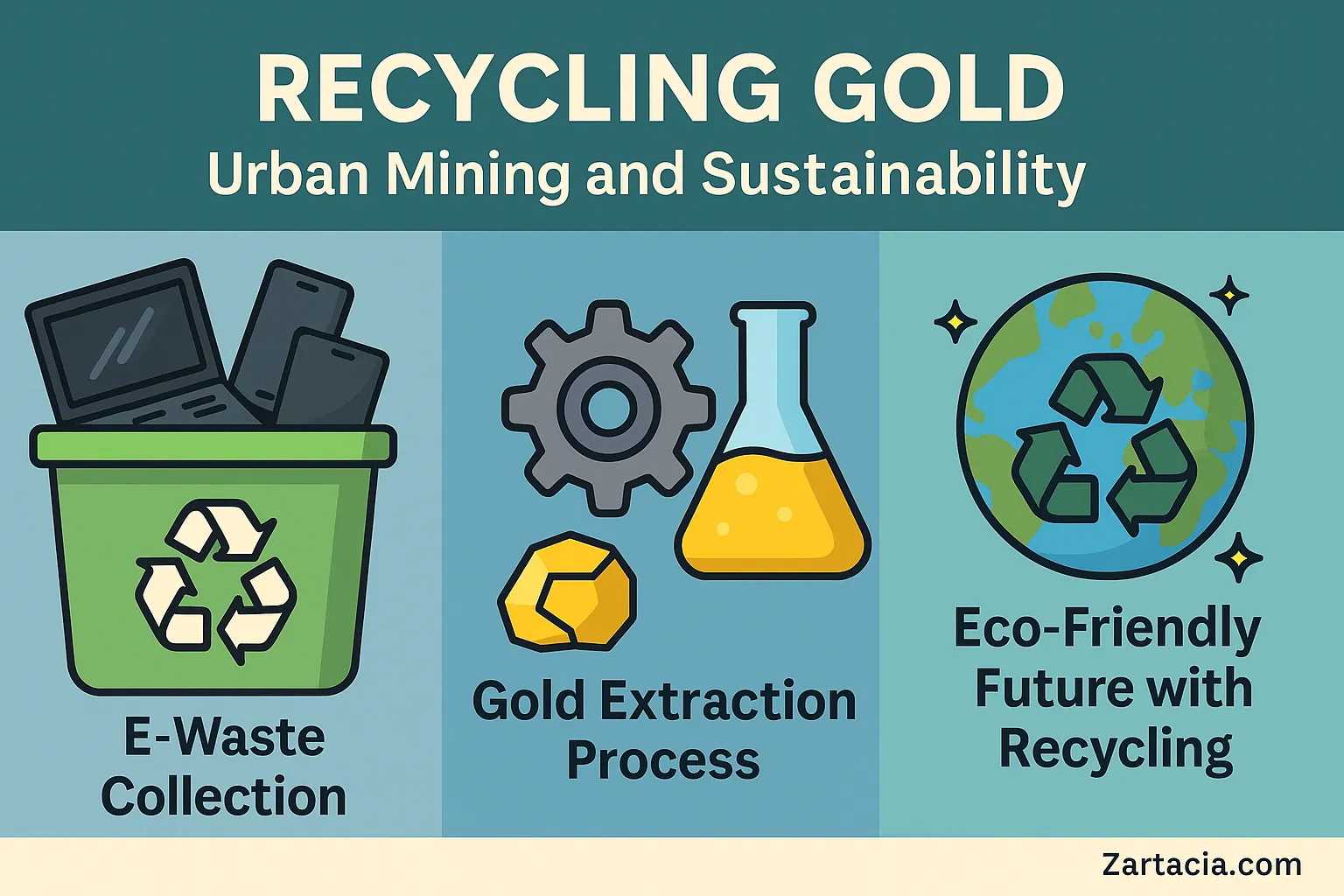
What is Urban Mining?
-
Urban mining refers to recovering gold and other metals from electronic waste.
-
Sources include smartphones, laptops, and industrial machines.
-
Furthermore, this process transforms waste into valuable resources.
-
As technology grows, e-waste is becoming one of the richest sources of gold.
The Process of Recycling Gold
-
Devices are collected, dismantled, and sorted.
-
Gold components are separated from plastics and other metals.
-
In addition, chemical and mechanical methods extract pure gold.
-
This process reduces waste that would otherwise pollute landfills.
Benefits of Gold Recycling
-
Environmental Protection: Less need for destructive mining.
-
Economic Value: Recovered gold re-enters the supply chain.
-
Sustainability: Recycling conserves natural resources.
-
Moreover, it creates jobs in recycling industries and supports innovation.
Global Trends in Urban Mining
-
Japan and South Korea lead in large-scale gold recycling from e-waste.
-
Europe invests in recycling plants to secure resources for technology.
-
Furthermore, global companies now design devices with recycling in mind.
-
These initiatives prove that urban mining is not only practical but essential.
📚 Student Section
🔹 Summary
-
Urban mining = extracting gold from e-waste.
-
Process: collect, dismantle, extract.
-
Benefits: environment, economy, sustainability.
-
Global leaders: Japan, South Korea, Europe.
🔹 Quiz
-
What is urban mining?
-
Which devices are main sources of recycled gold?
-
How does recycling gold protect the environment?
-
Which countries lead in gold recycling?
-
Why is recycling important for sustainability?
🔹 Difficult Words with Urdu Meanings
| Word | Meaning (Urdu) |
|---|---|
| Dismantle | توڑ کر الگ کرنا |
| Sustainability | پائیداری – مستقل بقا |
| E-Waste | الیکٹرانک کچرا |
| Extract | نکالنا – اخراج کرنا |
| Landfill | کچرا پھینکنے کی زمین |
❓ FAQs
Q1: What is the difference between traditional mining and urban mining?
Ans: Traditional mining extracts gold from earth, while urban mining recovers it from e-waste.
Q2: Why is recycling gold important for the environment?
Ans: Because it reduces toxic waste and prevents land pollution.
Q3: Which countries are pioneers in urban mining?
Ans: Japan, South Korea, and several European nations.
Q4: Can recycled gold be reused in electronics and jewelry?
Ans: Yes, recycled gold is as pure and valuable as mined gold.
Q5: How does urban mining support sustainability?
Ans: It conserves natural resources and lowers environmental damage.
🔗 Internal Linking
-
Link to Article 38: Ethical Gold – Fair Trade and Responsible Mining
-
Link to Article 36: Industrial Uses of Gold – Mobiles, Dentistry, Machinery
-
Link to Article 37: Gold in Modern Science and Research
🔗 External Linking
🌟 Conclusion
Recycling gold through urban mining is not just a trend—it is a necessity. By reducing waste, protecting the environment, and securing resources, recycled gold ensures a sustainable and responsible future. Truly, the gold of tomorrow may come not from mines, but from the devices we use today.