Meta Titles & Descriptions – Best Practices for Higher CTR in 2025
When someone searches on Google, the first thing they notice is the title and description of your page. This small text snippet often decides whether a user clicks your link or scrolls past it. That’s why meta titles and descriptions are powerful SEO tools.
In 2025, Google’s algorithm has become smarter, focusing on user intent and relevance. This means your titles and descriptions must not only include keywords but also persuade users to click. A well-written meta snippet can dramatically improve CTR (Click-Through Rate) and drive organic traffic without spending on ads.
This article will explain the importance of meta titles and descriptions, common mistakes to avoid, and step-by-step best practices to make your content stand out in search results.
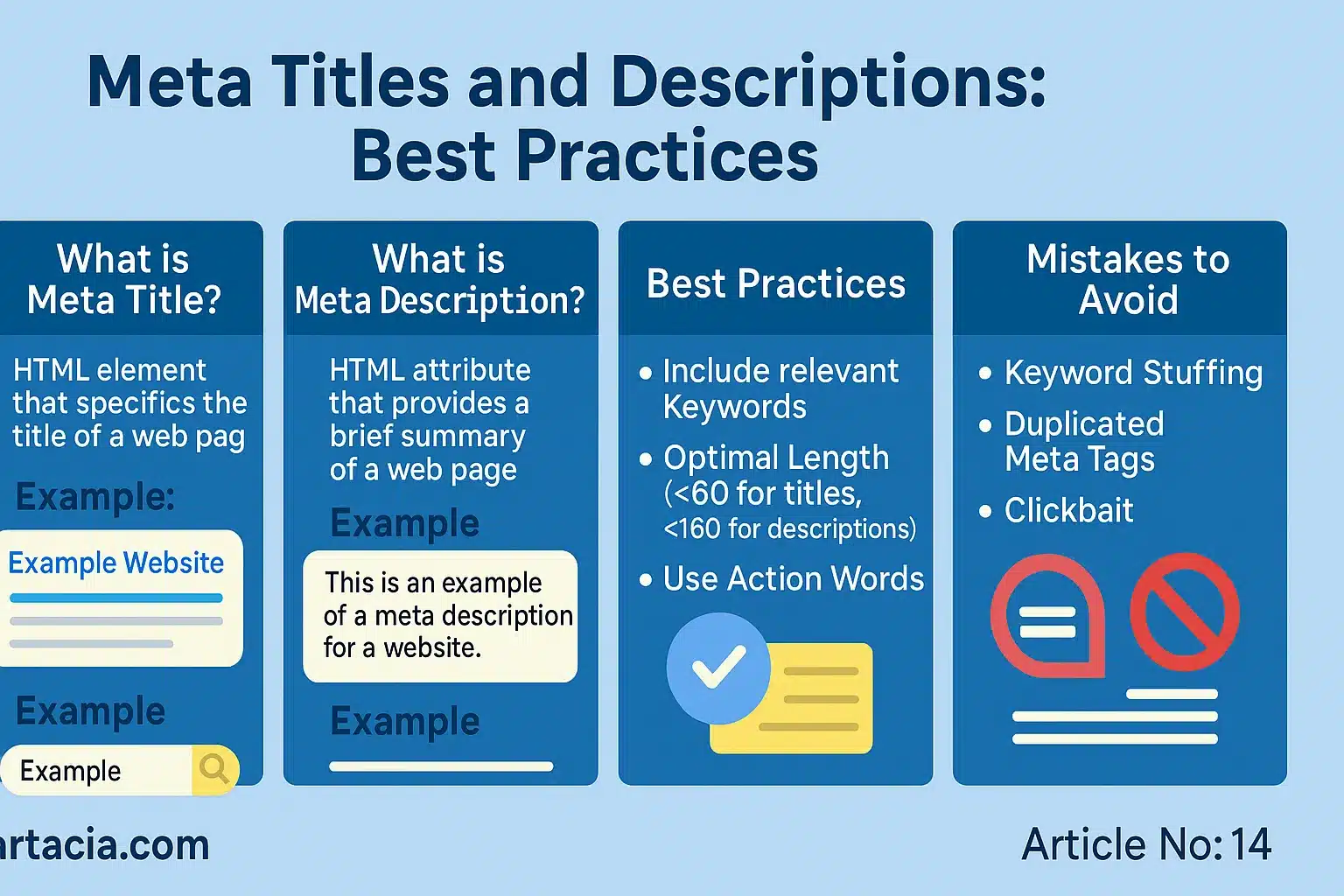
What is a Meta Title?
A Meta Title is the clickable blue headline shown on search engine results pages (SERPs).
Key facts:
-
It signals Google and users what the page is about.
-
It must include the focus keyword naturally.
-
It should be under 60 characters to avoid truncation.
Example:
Instead of writing “Hosting Plans for Businesses”, a better title would be:
“Best Affordable Hosting Plans for Small Businesses 2025”
This version is keyword-rich, descriptive, and more appealing.
What is a Meta Description?
A Meta Description is the short summary shown under the title in search results.
Key facts:
-
It should be under 155 characters.
-
It should summarize content and include the focus keyword once.
-
It should encourage action with persuasive words.
Example:
“Discover the best SEO strategies in 2025. Learn step-by-step tips to rank higher, boost traffic, and grow your business online.”
This creates curiosity and includes keywords naturally.
Best Practices for Writing Them
-
Include Focus Keyword – Always place the main keyword early in the title and at least once in the description.
-
Be Clear & Descriptive – Don’t mislead; describe exactly what users will find.
-
Use Action Words – Words like discover, learn, explore, boost, grow increase CTR.
-
Keep Length in Check – Titles under 60 characters, descriptions under 155.
-
Unique for Every Page – Avoid duplicate titles and descriptions across your site.
-
Match Search Intent – Ensure snippets match what users want to find.
Case Study: A blog changed vague titles like “SEO Tips” to “Top 10 SEO Tips to Rank Higher in 2025” and saw a 35% increase in CTR within 2 months.
Common Mistakes to Avoid
-
Keyword Stuffing – Makes titles look spammy.
-
Too Long Titles/Descriptions – Google cuts them off.
-
Clickbait Promises – Leads to higher bounce rates.
-
Using the Same Snippet Across Pages – Confuses both Google and users.
Remember: good snippets are short, clear, keyword-rich, and user-friendly.
Student Section
✅ Summary
Meta titles and descriptions are critical for SEO because they shape how users view your website in search results. The meta title is the clickable headline, while the description provides a short summary. Together, they influence CTR and can determine your page’s ranking success. Best practices include keeping titles under 60 characters, descriptions under 155 characters, using the focus keyword naturally, and writing persuasive text that matches user intent. Unique snippets for each page ensure better visibility. Common mistakes like keyword stuffing, clickbait, or duplicate titles must be avoided. With Google’s growing focus on user intent in 2025, meta titles and descriptions play a bigger role than ever. By following best practices, businesses can boost organic traffic, improve brand credibility, and gain more clicks without paid ads.
📝 Quiz
-
What is the maximum length for a meta title?
Answer: 60 characters. -
Should keywords appear in the meta description?
Answer: Yes, at least once. -
What happens if your title is too long?
Answer: Google cuts it off. -
Why should each page have a unique snippet?
Answer: To avoid duplication and improve clarity. -
Which action words can increase CTR?
Answer: Discover, Learn, Explore, Boost.
📘 Difficult Words Table
| Word | Meaning in Urdu |
|---|---|
| Truncation | کٹ جانا / مختصر ہونا |
| Persuasive | قائل کرنے والا |
| Credibility | اعتبار / ساکھ |
| Clickbait | دھوکہ دینے والا عنوان |
| Snippet | چھوٹا سا حصہ / خلاصہ |
FAQs
Q1: Can Google rewrite my meta description?
Yes, if it finds your description irrelevant, it may generate its own snippet.
Q2: Are meta keywords still important?
No, Google no longer uses meta keywords for ranking.
Q3: How do I test my meta snippets?
Use SEO plugins like Yoast or Rank Math to preview snippets.
Q4: Do meta titles impact ranking directly?
Yes, they are one of the strongest on-page SEO signals.
People are also reading
-
“Heading Tags (H1, H2, H3) – How to Use Them Effectively”
-
“On-Page SEO Checklist for Beginners”
-
“Long-Tail Keywords – Why They Matter”
