
On-Page, Off-Page & Technical SEO – Differences Explained
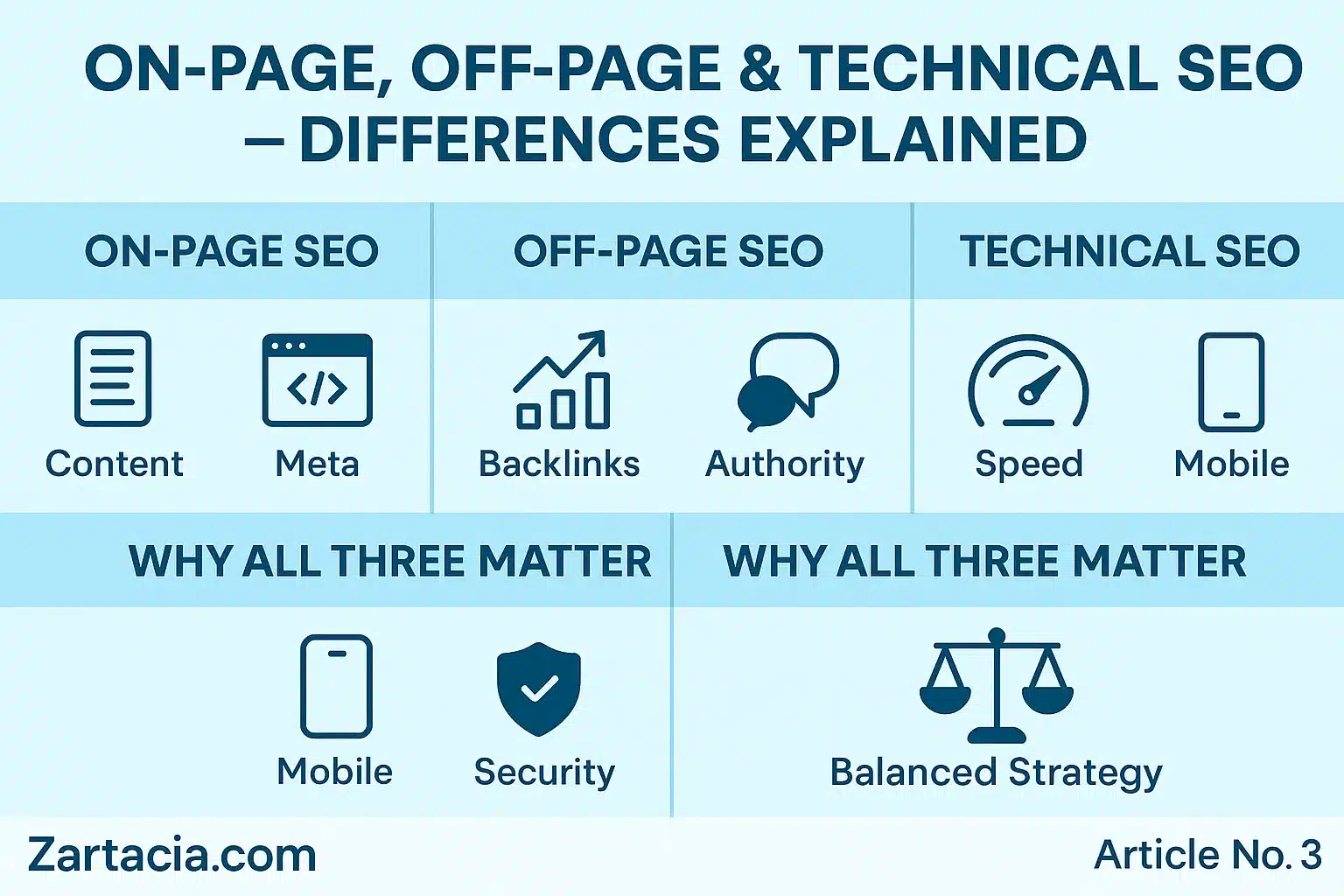
Search Engine Optimization (SEO) is not just one process—it is a combination of different strategies working together. To truly understand how to succeed in SEO, you must learn the differences between On-Page SEO, Off-Page SEO, and Technical SEO. Each plays a unique role in helping websites rank higher in search engines.
For example, a beautifully written article with perfect keywords (On-Page SEO) may still fail if the website is slow (Technical SEO) or lacks backlinks (Off-Page SEO). That’s why knowing the differences and how they complement each other is essential for beginners and professionals alike.
In 2025, search engines are smarter, placing more weight on content quality, website structure, and brand authority. This guide will explain each type of SEO, their importance, and why a balanced strategy requires all three.
What is On-Page SEO?
On-Page SEO refers to everything you do on your own website to improve search rankings. It’s the most beginner-friendly type of SEO because you control it directly.
Key elements include:
-
Content Optimization – Writing high-quality, keyword-rich, and user-friendly content.
-
Meta Tags – Crafting strong titles and descriptions that encourage clicks.
-
Headings (H1, H2, H3) – Structuring content for clarity.
-
Image SEO – Using descriptive file names and alt text.
Example: If you run a cooking blog, On-Page SEO means writing a recipe article with optimized keywords like “best pasta recipe 2025”, adding high-quality photos with alt text, and creating an engaging meta description.
On-Page SEO directly affects how search engines interpret your page and how users experience it.
What is Off-Page SEO?
Off-Page SEO focuses on actions taken outside your website to improve its reputation and authority. The most important factor here is backlinks—links from other websites pointing to yours.
Factors that influence Off-Page SEO include:
-
Backlinks Quality & Quantity – A link from a trusted news site is more valuable than hundreds of links from low-quality blogs.
-
Brand Mentions – Even without a direct link, mentions of your brand build credibility.
-
Social Signals – Shares, likes, and engagement on social platforms indirectly support rankings.
Example: If your cooking blog is mentioned in BBC Food or shared widely on Twitter, it boosts your authority in Google’s eyes.
Off-Page SEO is about building trust and authority, making search engines view your website as a reliable source.
What is Technical SEO?
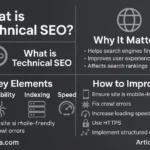
Technical SEO ensures that your website is search engine-friendly. It covers everything behind the scenes that helps crawlers index your site properly.
Key aspects include:
-
Site Speed – Faster websites rank higher.
-
Mobile Optimization – Most users search on mobile; Google prioritizes mobile-friendly sites.
-
HTTPS Security – Secure websites (SSL certificates) gain trust.
-
Crawlability – Proper XML sitemaps and robots.txt for easy crawling.
-
Core Web Vitals – User experience metrics like loading, interactivity, and visual stability.
Example: If your cooking blog takes 10 seconds to load, users will leave before reading, harming your rankings. By optimizing speed and mobile design, you improve Technical SEO.
Technical SEO is the foundation—without it, even great content and backlinks won’t succeed.
Why You Need All Three
SEO works best when all three types are combined:
-
On-Page SEO attracts users with quality content.
-
Off-Page SEO builds trust through backlinks and authority.
-
Technical SEO ensures search engines can easily crawl and index your site.
Think of SEO like a car:
-
The engine is Technical SEO (it makes the car run).
-
The body design is On-Page SEO (what users see and interact with).
-
The fuel is Off-Page SEO (it powers your car to go further).
Without one, the system won’t function effectively.
 Student Section
✅ Summary (150 words)
SEO is divided into three key parts: On-Page, Off-Page, and Technical SEO. On-Page SEO deals with the content and elements you directly control on your site—like keywords, headings, images, and meta tags. Off-Page SEO focuses on building authority through backlinks, social shares, and mentions across the web. Technical SEO ensures your website is crawlable, secure, fast, and mobile-friendly. Each plays a unique role: On-Page attracts users, Off-Page builds credibility, and Technical makes sure search engines can understand your content. To succeed in 2025, you need all three. A well-optimized page without backlinks may struggle, while a site with strong authority but poor speed may fail users. The most effective SEO strategies are those that balance content, trust, and technical foundations for long-term growth.
📝 Quiz
-
What does On-Page SEO focus on?
Answer: Content, keywords, meta tags, and images. -
What is the main goal of Off-Page SEO?
Answer: To build trust and authority using backlinks. -
Name one factor that affects Technical SEO.
Answer: Site speed (or mobile optimization, HTTPS, crawlability). -
Which SEO type deals with brand mentions and social signals?
Answer: Off-Page SEO. -
Why are all three types of SEO necessary?
Answer: Because they work together to attract, validate, and rank content.
📘 Difficult Words Table
| Word | Meaning in Urdu |
|---|---|
| Crawlability | ویب صفحات تک رسائی کی صلاحیت |
| Authority | اعتبار / وقار |
| Backlinks | بیرونی روابط |
| Core Web Vitals | بنیادی صارف تجربے کے اشارے |
| Optimization | بہتری / اصلاح |
FAQs
Q1: Which SEO type should beginners start with?
Beginners should start with On-Page SEO, as it’s easiest to control.
Q2: Are backlinks still important in 2025?
Yes, backlinks remain crucial for Off-Page SEO and building trust.
Q3: Can good content rank without Technical SEO?
Rarely—if a website is slow or not crawlable, content won’t rank well.
Q4: Is social media part of SEO?
Indirectly—social signals don’t directly rank pages but help with visibility and engagement.
People are also reading
-
“Image SEO – How to Optimize Images for Google”
-
“Keyword Research – Step by Step Guide”
-
“Duplicate Content Issues & How to Fix Them”