Internal Linking vs External Linking – Best Practices
Links are the foundation of the web. They connect pages, guide users, and signal relationships between websites. In SEO, links play a critical role in determining how search engines crawl and rank your content.
There are two main types: internal linking and external linking. Internal links connect pages within your own website, while external links connect your site to other websites. Both are important, but each serves a different purpose.
In 2025, with Google’s focus on authority and user experience, mastering linking best practices is essential. This article will explain the difference between internal and external linking, their benefits, and how to use them effectively.
What is Internal Linking?
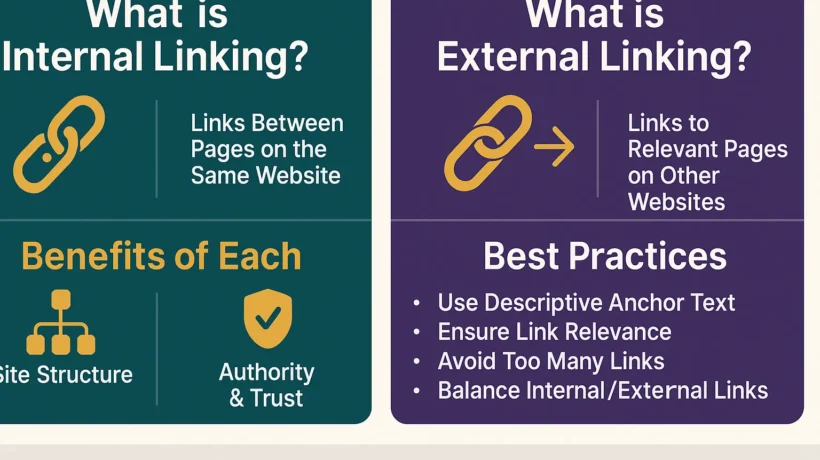
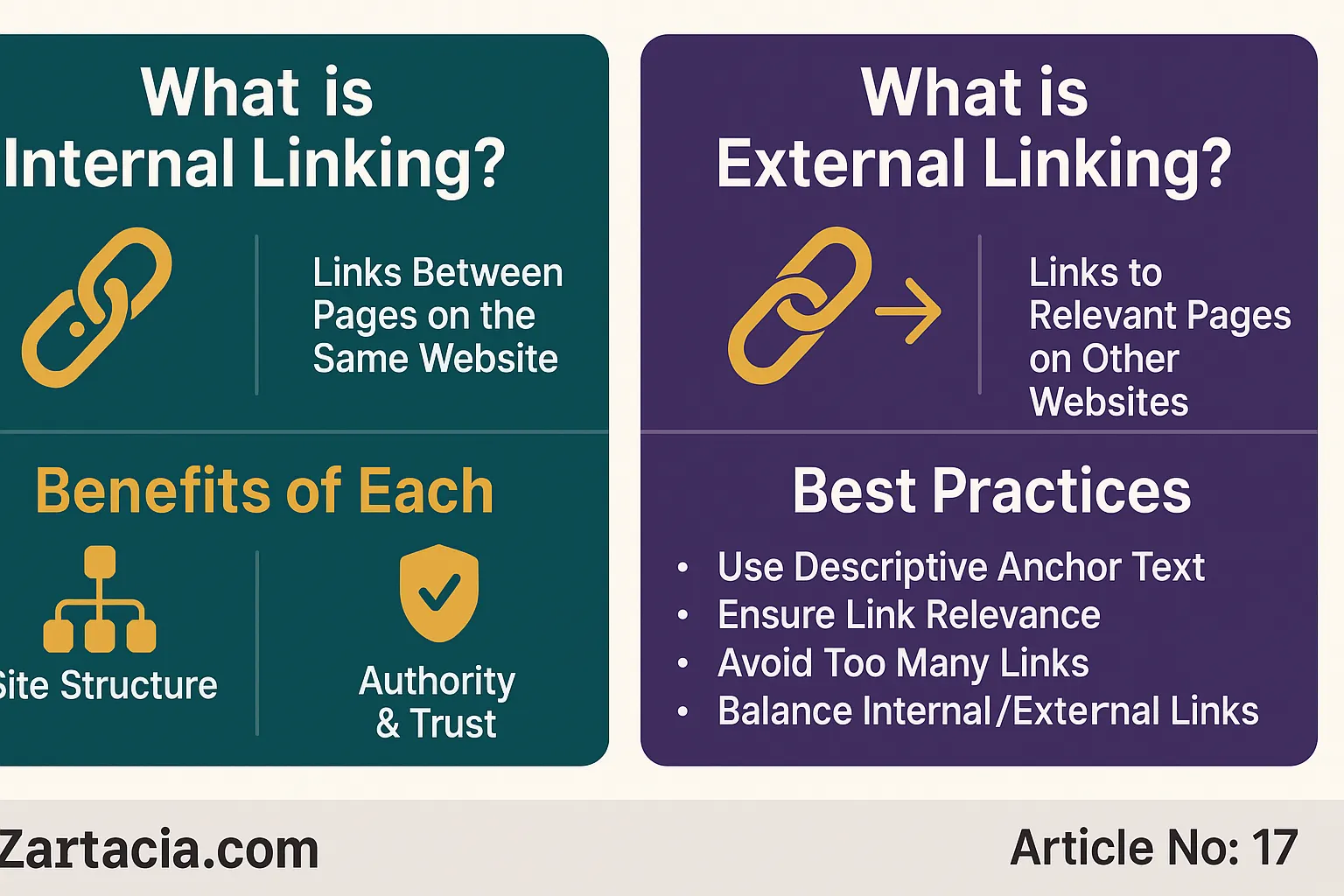
Internal linking refers to hyperlinks that connect different pages on the same website.
Benefits:
-
Improved Navigation – Helps users move around easily.
-
Distributes Authority – Shares “link juice” with important pages.
-
Boosts Engagement – Keeps visitors on your site longer.
-
Improves Crawlability – Helps Google discover all your pages.
Example: Linking from a blog post about “SEO Basics” to another post about “Keyword Research.”
What is External Linking?
External linking refers to hyperlinks that point to websites outside your domain.
Benefits:
-
Builds Credibility – Linking to trusted sources improves reliability.
-
Contextual Support – Shows Google that your content is backed by research.
-
Networking – Creates opportunities for backlinks and partnerships.
-
User Value – Provides additional information for readers.
Example: Linking to an official Google guide when explaining ranking factors.
Benefits of Each
-
Internal Links
-
Increase dwell time
-
Strengthen topical authority
-
Direct traffic to key landing pages
-
-
External Links
-
Enhance trustworthiness
-
Improve topical relevance
-
Create outbound signals of credibility
-
Both types of links complement each other. Internal links build your site’s structure, while external links build authority and trust.
Best Practices
-
Use Descriptive Anchor Text – Avoid “click here.” Instead, use meaningful phrases.
-
Balance Internal & External Links – Don’t overload either.
-
Link to Relevant Content Only – Ensure all links add value.
-
Open External Links in New Tabs – Keep users on your site.
-
Check for Broken Links – Use tools to fix dead links quickly.
Case Study: A blog that strategically added internal links to its top 10 articles saw a 40% increase in page views and better rankings for targeted keywords.
Student Section
✅ Summary
Internal and external links are both vital for SEO. Internal links connect your website’s pages, helping users navigate, boosting engagement, and allowing Google to crawl efficiently. They also distribute authority to key landing pages. External links, on the other hand, connect your content to trusted websites, building credibility and improving topical relevance. Both types work together—internal links strengthen your site’s structure, while external links build authority and trust signals. Best practices include using descriptive anchor text, balancing the number of links, ensuring relevance, and fixing broken links. Opening external links in new tabs is also recommended to keep visitors on your site. By applying these linking strategies, websites can improve rankings, increase user engagement, and build long-term authority in search results.
📝 Quiz
-
What is an internal link?
Answer: A link that connects two pages within the same website. -
Why are external links important?
Answer: They build credibility and trust. -
What is the best anchor text style?
Answer: Descriptive and relevant. -
Should external links open in new tabs?
Answer: Yes, to keep users on your site. -
What happens if you ignore broken links?
Answer: It hurts SEO and user experience.
📘 Difficult Words Table
| Word | Meaning in Urdu |
|---|---|
| Crawlability | سرچ انجن کا مواد پڑھنا |
| Credibility | بھروسہ / ساکھ |
| Authority | وقار / اعتبار |
| Anchor Text | وہ الفاظ جن پر کلک ہوتا ہے |
| Dwell Time | وزیٹر کے رکنے کا وقت |
FAQs
Q1: Are too many internal links bad?
Yes, too many links can confuse users and weaken SEO signals.
Q2: Should I nofollow external links?
Only if the link is untrusted or paid. Trusted sources can remain dofollow.
Q3: Do external links reduce my SEO authority?
No, linking to trusted sources actually improves credibility.
Q4: How often should I audit links?
At least once every 3 months to fix broken or outdated links.
People are also reading
-
“On-Page SEO Checklist for Beginners”
-
“Image SEO – How to Optimize Images for Google”
-
“Duplicate Content Issues & How to Fix Them”
